Sale 10% Off Your First Order

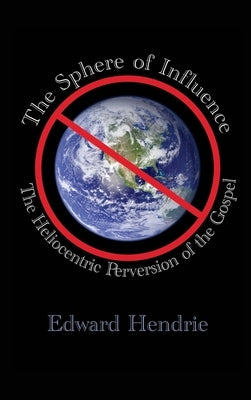
This book serves as a sequel to The Greatest Lie on Earth (Expanded Edition): Proof That Our World Is Not a Moving Globe. Edward Hendrie examines the infiltration of heliocentrism into Christian theology and its consequences for biblical interpretation and faith.
The book establishes that Christian belief requires acceptance of all scripture as divinely inspired. "All scripture is given by inspiration of God, and is profitable for doctrine, for reproof, for correction, for instruction in righteousness" (2 Timothy 3:16). Hendrie argues that God's account of creation constitutes an integral component of the gospel message, not a peripheral detail subject to reinterpretation.
The text emphasizes Jesus's statement in John 3:12: "If I have told you earthly things, and ye believe not, how shall ye believe, if I tell you of heavenly things?" This forms the foundation for Hendrie's argument that understanding earthly creation accurately is essential to genuine faith.
Drawing from Romans 1:19-20, Hendrie contends that God reveals himself through creation. The book argues that misunderstanding God's creation leads to misunderstanding God himself. According to the author, belief in a heliocentric creation necessarily leads to belief in a heliocentric creator—which he identifies as a false god.
The text references Colossians 1:16-18, establishing that Jesus created all things in heaven and earth, making the nature of creation a christological issue rather than merely a cosmological one.
Hendrie presents the case that scripture describes a stationary, non-spherical earth. The book challenges the accommodation of heliocentric cosmology within Christian theology, arguing this represents a compromise that undermines scriptural authority.
The author warns against accepting "another Jesus" or "another gospel" as referenced in 2 Corinthians 11:4, positioning the cosmology debate as directly connected to the preservation of orthodox Christian doctrine.
Published by Great Mountain Publishing in July 2019, this hardcover edition provides comprehensive theological and scriptural analysis. The book serves readers interested in biblical literalism, geocentric cosmology, and the intersection of scripture with scientific claims.
This work appeals to those examining how worldview assumptions affect biblical interpretation and seeking to understand historical Christian perspectives on cosmology that predate the widespread acceptance of heliocentrism.