Sale 10% Off Your First Order

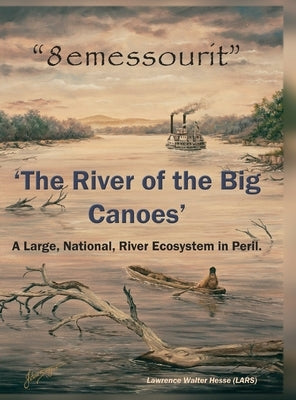
The River of the Big Canoes documents the ecological transformation of the Missouri River through decades of scientific research and firsthand experience by Lawrence Hesse. This environmental history examines how human intervention—dams, channelization, levees, and land conversion—has reshaped one of North America's largest river systems.
The Missouri River once supported diverse habitats including cattail marshes, sandbars, and floodplain forests. These ecosystems sustained extraordinary wildlife biodiversity, including now-endangered species such as the scaleshell mussel and interior least tern. The book reveals how natural river processes—flooding, sediment transport, and meandering—were essential to river health, and how their disruption led to massive habitat and biodiversity losses.
Hesse exposes unintended consequences of large-scale water projects: altered river flows, degraded fish spawning grounds, unnatural erosion, and collapsed energy and nutrient cycles. The book highlights cultural and policy failures where conservation promises went unfulfilled and environmental safeguards were overshadowed by development priorities.
With climate change threatening the Great Plains, The River of the Big Canoes emphasizes sustainable water management, public engagement, and ecological restoration. The book serves as both tribute to the Missouri River's lost richness and appeal to protect remaining ecosystems.
Essential reading for conservation professionals, environmental historians, and anyone interested in the complex relationship between humanity and river ecosystems.
About the Author
Hesse (Lars), Lawrence Walter: - Lawrence Walter Hesse (Lars, Cap), born in 1947, Knox County, Crofton, NE 68730. Married; one daughter, four grand children, one great grand child; six years in the Armed Forces of the United States; BS, Wayne State College, Nebraska; MA, University of South Dakota; statistics and computer sciences, University of Nebraska, Lincoln. Disciplines include: Plant and Animal Science, Ecology, Fisheries, Limnology, Geomorphology, and Hydrology. Hired by Nebraska Game and Parks Commission Research Division (NGPC) in 1974 as part of a three person team investigating the impact of Cooper and Fort Calhoun Nuclear Power Stations on biota in the Missouri River (Eleven Agency Study Committee, ESAC). Elevated to overall project leader the following year. Hired permanently the next year as Research Specialist for Missouri River and Tributary studies. Resigned from NPGC in 1995; founded River Ecosystems, Inc., a Nebraska for-profit research and consulting firm; founded Rivers Corporation, Inc. In 1996, a Nebraska non-profit (IRS 501(c )(3).Contact Information: P.O. Box 395, Crofton, NE 68730; reieco3@gmail.com, 402-640-7809.