Sale 10% Off Your First Order

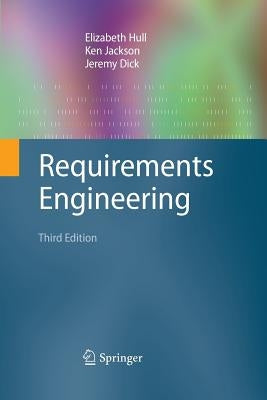
Written for those who want to develop their knowledge of requirements engineering process, whether practitioners or students.
Using the latest research and driven by practical experience from industry, Requirements Engineering gives useful hints to practitioners on how to write and structure requirements. It explains the importance of Systems Engineering and the creation of effective solutions to problems. It describes the underlying representations used in system modeling and introduces the UML2, and considers the relationship between requirements and modeling. Covering a generic multi-layer requirements process, the book discusses the key elements of effective requirements management. The latest version of DOORS (Version 7) - a software tool which serves as an enabler of a requirements management process - is also introduced to the reader here.
This textbook provides comprehensive coverage of requirements engineering fundamentals, combining theoretical frameworks with practical industry applications. The multi-layer requirements process detailed throughout the book offers a structured approach to managing complex software and systems projects.
The integration of UML2 modeling techniques demonstrates how visual representations support requirements documentation and communication among stakeholders. The DOORS Version 7 software tool introduction provides hands-on guidance for implementing requirements management processes in professional environments.
Authored by Elizabeth Hull, Jeremy Dick, and Ken Jackson, this textbook draws from extensive industry experience and academic research. The practical insights throughout reflect real-world challenges faced by requirements engineers and business analysts working on software development and systems engineering projects.
This resource serves both academic and professional audiences. Students pursuing computer science or software engineering degrees will find structured learning materials, while IT professionals and business analysts can reference practical techniques for immediate application in their projects.
Additional material and links are available at: http://www.requirementsengineering.info