Sale 10% Off Your First Order

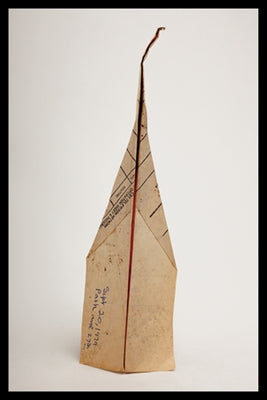
This first volume of The Collections of Harry Smith, Catalogue Raisonné series documents one of the most unusual collecting pursuits in modern art history: 251 paper airplanes gathered from the streets of New York City over approximately 20 years by legendary artist Harry Smith.
Harry Smith (1923-1991) was a filmmaker, painter, anthropologist, musicologist, and occultist whose work shaped beat culture and avant-garde art. His kaleidoscopic experimental films influenced generations of artists, while his landmark Anthology of American Folk Music (1952) laid the foundation for the 1950s and 1960s folk music revival. Beyond his artwork, Smith was renowned for vast collections of curious objects that reflected his eclectic research obsessions.
The paper airplanes featured in this catalogue rank among Smith's most mysterious collecting pursuits. Each piece is presented with richly detailed photographic documentation, preserving these ephemeral street finds as artifacts of urban life and spontaneous creativity. The collection captures the whimsical and weird nature of Smith's curatorial vision, transforming discarded paper into objects worthy of scholarly examination.
This extensive compendium presents comprehensive documentation of Smith's extraordinary aeronautic pursuit. The catalogue includes detailed photographs of all 251 paper airplanes, accompanied by the tangled history and myths that surround this unique collection. Each entry provides insight into Smith's methodology and the cultural context of his street-level anthropology.
Published by J & L Books in October 2015, this paperback volume serves as both an art book and a scholarly reference. The catalogue raisonné format ensures thorough documentation and indexing of Smith's collection, making it an essential resource for researchers, collectors, and enthusiasts of outsider art, experimental film, and beat culture.
This volume appeals to collectors of artist monographs, students of American counterculture, and anyone fascinated by unconventional collecting practices. It offers a window into the mind of one of the 20th century's most enigmatic polymaths, documenting a collection that bridges street culture, conceptual art, and ethnographic curiosity.