Sale 10% Off Your First Order

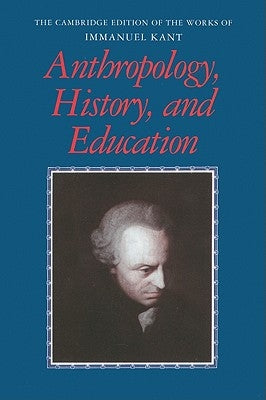
Anthropology, History, and Education presents Immanuel Kant's comprehensive exploration of the fundamental philosophical question: "What is the human being?" This Cambridge Edition, first published in 2007, compiles all of Kant's major writings on human nature, spanning a thirty-nine year period from 1764 to 1803.
This volume contains several works that had never before been translated into English, making it an essential resource for scholars and students of Kant's philosophy. While Kant addressed the nature of humanity indirectly through his celebrated works on metaphysics, epistemology, moral and legal philosophy, aesthetics, and the philosophy of religion, this collection presents his direct approach through physical and cultural anthropology, the philosophy of history, and education.
Kant consistently maintained that the question "What is the human being?" should be philosophy's most fundamental concern. This volume effectively presents his entire philosophical system in an accessible guise, making complex philosophical concepts approachable for graduate students, researchers, and philosophy enthusiasts.
The collection encompasses Kant's extensive but less well-known writings on:
Published by Cambridge University Press as part of the Cambridge Edition of the Works of Immanuel Kant in Translation, this paperback edition provides authoritative translations and scholarly apparatus necessary for serious academic study. The volume serves as both a primary source for research and a comprehensive textbook for university courses on Kant, German philosophy, and 18th-century philosophical thought.
Edited by Robert B. Louden, Professor of Philosophy at the University of Southern Maine and editor of Kant: Anthropology from a Pragmatic Point of View (2006), and Günter Zöller, Professor of Philosophy at the University of Munich and editor of Fichte: The System of Ethics (2005), this edition benefits from leading Kant scholarship.