Description
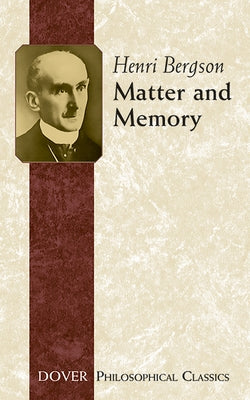
Matter and Memory by Henri Bergson
French philosopher Henri Bergson produced four major works in his lifetime, the second of which, "Matter and Memory", is a philosophical and complex nineteenth century exploration of human nature and the spirituality of memory. In this work, Bergson investigates the function of the brain, and opposes the idea of memory being of a material nature, lodged within a particular part of the nervous system. He makes a claim early in this essay that Matter and Memory "is frankly dualistic," leading to a careful consideration of the problems in the relation of body and mind. His theories on sense, dualism, pure perception, concept of virtuality and famous image of the memory cone often make Bergson's essay a confusing and challenging existentialist work. However, the years of research and extensive pathological investigations spent in preparation for this and other essays have gained Bergson great distinction as a brilliant, though unjustly neglected, theorist and philosopher.
Key Philosophical Concepts
This work challenges materialist views of memory and consciousness, proposing instead that memory exists independently of physical brain matter. Bergson's dualistic framework examines how perception and memory interact, introducing concepts like pure perception and the memory cone that have influenced generations of philosophers and psychologists.
Essential Reading for Philosophy Students
Matter and Memory remains a foundational text in continental philosophy, existentialism, and consciousness studies. The book's exploration of the mind-body problem offers insights relevant to modern neuroscience, cognitive psychology, and philosophy of mind. Bergson's extensive pathological research provides empirical grounding for his theoretical claims about memory function and human consciousness.