
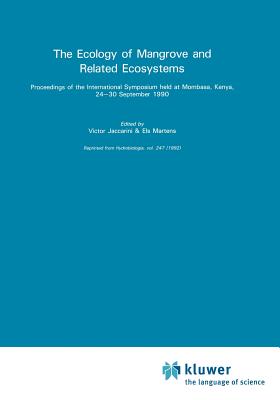
The Ecology of Mangrove and Related Ecosystems: Proceedings of the International Symposium Held at Mombasa, Kenya, 24-30 September 1990 - Paperback
$217.99
$219.99
-1%Quantity
01
Pay over time for orders over $35.00 with
Offers & Perks
Earn 217 points with this purchase
Added to your rewards balance after checkout.
100 points welcome bonus
Create an account and start with extra points.
Availability:In StockContributor:Victor Jaccarini, Els MartensSeries:Developments in HydrobiologyTheme:Topical/EcologyPublish date:2/4/2011Pages:266
Languages:EnglishPublisher:SpringerISBN-13:9789048142231ISBN-10:9048142237UPC:9789048142231Book Category:Nature, ScienceBook Subcategory:Ecosystems & Habitats, Life Sciences, PlantsBook Topic:Lakes, Ponds & Swamps, EcologySize:10.00 x 7.00 x 0.59 inchesWeight:0.49Product ID:SCE3K5FJEA
The mangrove, seagrass and coral reef ecosystems are of paramount ecological importance but have already undergone great degradation, which is advancing at an alarming rate. If present trends continue, the natural resource basis of the economy and ecology of tropical coastal regions will soon be ruined. This was the unanimous conclusion of the 110 scientists from 23 countries who gathered in Mombasa, Kenya, for a Symposium on the ecology of these ecosystems.
Mangrove forest systems yield large amounts of fish, crabs, prawns and oysters. They are also valuable sources of fuelwood, timber, tannin and other natural products. Their non-marketable value is of equal importance: stabilization of the coastline, an indispensable nursery ground for numerous marine species with commercial value, a natural filter maintaining the clarity of nearshore water, a home for resident and migratory birds and other wildlife. Many of the true mangrove flora and fauna are now endangered by the clearing of the mangroves. It has been shown that in many countries between 25 and 100% of the mangrove forest has been destroyed alraedy in the last twenty years.
The international scientific assembly concluded that much can be done to stop the degradation of these damaged ecosystems and to rehabilitate them. But new techniques must be found to use them on a sustainable basis for long-term economic return and for the well-being of coastal human settlements and a healthy environment.
Mangrove forest systems yield large amounts of fish, crabs, prawns and oysters. They are also valuable sources of fuelwood, timber, tannin and other natural products. Their non-marketable value is of equal importance: stabilization of the coastline, an indispensable nursery ground for numerous marine species with commercial value, a natural filter maintaining the clarity of nearshore water, a home for resident and migratory birds and other wildlife. Many of the true mangrove flora and fauna are now endangered by the clearing of the mangroves. It has been shown that in many countries between 25 and 100% of the mangrove forest has been destroyed alraedy in the last twenty years.
The international scientific assembly concluded that much can be done to stop the degradation of these damaged ecosystems and to rehabilitate them. But new techniques must be found to use them on a sustainable basis for long-term economic return and for the well-being of coastal human settlements and a healthy environment.
Languages:EnglishPublisher:SpringerISBN-13:9789048142231ISBN-10:9048142237UPC:9789048142231Book Category:Nature, ScienceBook Subcategory:Ecosystems & Habitats, Life Sciences, PlantsBook Topic:Lakes, Ponds & Swamps, EcologySize:10.00 x 7.00 x 0.59 inchesWeight:0.49Product ID:SCE3K5FJEA
Publisher: Springer
Edition
Softcover Repri Edition
Contributor(s)
Free shipping on orders over $75. Standard shipping takes 3-7 business days. Eligible items may be returned within 30 days of delivery. Conditions apply.