
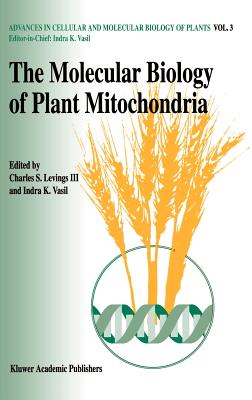
The Molecular Biology of Plant Mitochondria - Hardcover
$326.99
$329.99
-1%Quantity
01
Pay over time for orders over $35.00 with
Offers & Perks
Earn 326 points with this purchase
Added to your rewards balance after checkout.
100 points welcome bonus
Create an account and start with extra points.
Availability:In StockContributor:Charles S. Levings III, Indra K. VasilSeries:Advances in Cellular and Molecular Biology of PlantsPublish date:9/30/1995Pages:673
Languages:EnglishPublisher:SpringerISBN-13:9780792332244ISBN-10:0792332245UPC:9780792332244Book Category:ScienceBook Subcategory:Life SciencesBook Topic:Botany, Anatomy & Physiology, Cell BiologySize:9.21 x 6.14 x 1.44 inchesWeight:1.14Product ID:SCA7X6AKT0
The double helix architecture of DNA was elucidated in 1953. Twenty years later, in 1973, the discovery of restriction enzymes helped to create recombi- nant DNA molecules in vitro. The implications of these powerful and novel methods of molecular biology, and their potential in the genetic manipulation and improvement of microbes, plants and animals, became increasingly evi- dent, and led to the birth of modern biotechnology. The first transgenic plants in which a bacterial gene had been stably integrated were produced in 1983, and by 1993 transgenic plants had been produced in all major crop species, including the cereals and the legumes. These remarkable achieve- ments have resulted in the production of crops that are resistant to potent but environmentally safe herbicides, or to viral pathogens and insect pests. In other instances genes have been introduced that delay fruit ripening, or increase starch content, or cause male sterility. Most of these manipulations are based on the introduction of a single gene - generally of bacterial origi- that regulates an important monogenic trait, into the crop of choice. Many of the engineered crops are now under field trials and are expected to be commercially produced within the next few years. The early successes in plant biotechnology led to the realization that further molecular improvement of plants will require a thorough understanding of the molecular basis of plant development, and the identification and charac- terization of genes that regulate agronomically important multi genic traits.
Languages:EnglishPublisher:SpringerISBN-13:9780792332244ISBN-10:0792332245UPC:9780792332244Book Category:ScienceBook Subcategory:Life SciencesBook Topic:Botany, Anatomy & Physiology, Cell BiologySize:9.21 x 6.14 x 1.44 inchesWeight:1.14Product ID:SCA7X6AKT0
Publisher: Springer
Edition
1995 Edition
Contributor(s)
Free shipping on orders over $75. Standard shipping takes 3-7 business days. Returns accepted within 30 days of purchase.