
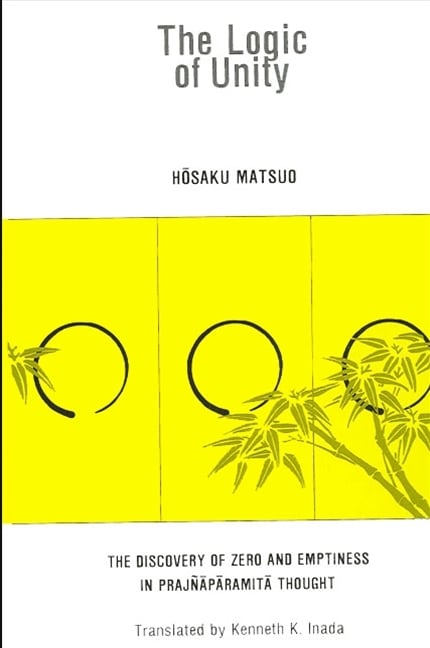
The Logic of Unity: The Discovery of Zero and Emptiness in Prajñāpāramitā Thought - Paperback
Pay over time for orders over $35.00 with
Offers & Perks
Earn 37 points with this purchase
Added to your rewards balance after checkout.
100 points welcome bonus
Create an account and start with extra points.
This clear and elegant translation reveals how a modern Japanese thinker dared to show the basic flaw of Western epistemology. In unmasking this limitation, Matsuo presents an Eastern view of a unified experience, and provides an epistemological basis for comparative philosophy.
Matsuo notes that while early Greek thought began by focusing on the right counsel ("Know thyself"), since then Western thought has been influenced by empiricistic analysis fired by the rise of scientific philosophy. The author thus turns to Eastern epistemology, in particular Buddhist thought, for clues to the unified experience. The seminal idea of emptiness (śūnyatā) plays a distinct role in this discovery. The concept of emptiness encompasses the whole dimension of perception where there is no room for separation into mind and body and/or any other form of dichotomy.
Once it is known that the total dimension of perception-the logic of unity-functions in each and every person, then and only then can the field of comparative thought and philosophy be cleared of al preconceptions and move into a more fruitful exchange of ideas. Until such a time, Matsuo claims, we are hopelessly engaged in merely refining the epistemological process without ever being able to understand the very basis of intelligence.
Kenneth K. Inada is Professor of Philosophy at State University of New York at Buffalo and co-editor of Buddhism and American Thinkers, also published by SUNY Press. Hōsaku Matsuo was a practicing physician and founding member of the Japanese Association of Comparative Philosophy.
Contributor(s)
Author
Free shipping on orders over $75. Standard shipping takes 3-7 business days. Eligible items may be returned within 30 days of delivery. Conditions apply.