
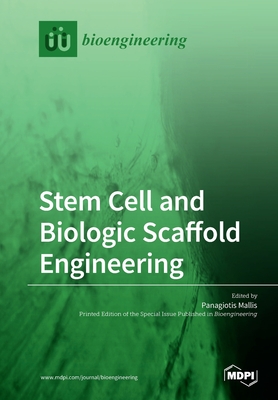
Stem Cell and Biologic Scaffold Engineering - Paperback
Pay over time for orders over $35.00 with
Offers & Perks
Earn 34 points with this purchase
Added to your rewards balance after checkout.
100 points welcome bonus
Create an account and start with extra points.
Tissue engineering and regenerative medicine is a rapidly evolving research field which effectively combines stem cells and biologic scaffolds in order to replace damaged tissues. Biologic scaffolds can be produced through the removal of resident cellular populations using several tissue engineering approaches, such as the decellularization method. Indeed, the decellularization method aims to develop a cell-free biologic scaffold while keeping the extracellular matrix (ECM) intact. Furthermore, biologic scaffolds have been investigated for their in vitro potential for whole organ development. Currently, clinical products composed of decellularized matrices, such as pericardium, urinary bladder, small intestine, heart valves, nerve conduits, trachea, and vessels, are being evaluated for use in human clinical trials. Tissue engineering strategies require the interaction of biologic scaffolds with cellular populations. Among them, stem cells are characterized by unlimited cell division, self-renewal, and differentiation potential, distinguishing themselves as a frontline source for the repopulation of decellularized matrices and scaffolds. Under this scheme, stem cells can be isolated from patients, expanded under good manufacturing practices (GMPs), used for the repopulation of biologic scaffolds and, finally, returned to the patient. The interaction between scaffolds and stem cells is thought to be crucial for their infiltration, adhesion, and differentiation into specific cell types. In addition, biomedical devices such as bioreactors contribute to the uniform repopulation of scaffolds. Until now, remarkable efforts have been made by the scientific society in order to establish the proper repopulation conditions of decellularized matrices and scaffolds. However, parameters such as stem cell number, in vitro cultivation conditions, and specific growth media composition need further evaluation. The ultimate goal is the development of "artificial" tissues similar to native ones, which is achieved by properly combining stem cells and biologic scaffolds and thus bringing them one step closer to personalized medicine. The original research articles and comprehensive reviews in this Special Issue deal with the use of stem cells and biologic scaffolds that utilize state-of-the-art tissue engineering and regenerative medicine approaches.
Contributor(s)
Free shipping on orders over $75. Standard shipping takes 3-7 business days. Returns accepted within 30 days of purchase.