
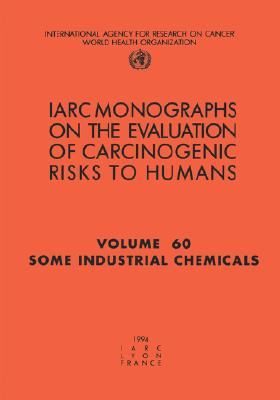
Some Industrial Chemicals - Paperback
$50.99
$54.45
-6%Choose Option
Paperback
$50.99
$54.45

Paperback
$50.99
$54.45
Quantity
01
Pay over time for orders over $35.00 with
Offers & Perks
Earn 50 points with this purchase
Added to your rewards balance after checkout.
100 points welcome bonus
Create an account and start with extra points.
Availability:In StockContributor:The International Agency for Research onSeries:IARC Monographs on the Evaluation of the Carcinogenic RisksPublish date:12/31/2000Pages:564
Languages:EnglishPublisher:World Health OrganizationISBN-13:9789283212775ISBN-10:9283212770UPC:9789283212775Book Category:Science, MedicalBook Subcategory:Life Sciences, Health Risk Assessment, ResearchBook Topic:BiologySize:9.50 x 6.75 x 1.17 inchesWeight:0.985Product ID:SC601VZFEH
Evaluates or re-evaluates the carcinogenic risks to humans posed by exposure to sixteen organic industrial chemicals. These included some aromatic amines (ortho-toluidine, 4-chloro-ortho-toluidine, and 5-chloro-ortho-toluidine), some ethanolamines (di- and triethanolamine and N-nitrosodiethanolamine), and three esters [di(2-ethylhexyl) phthalate (DEHP), di(2-ethylhexyl) adipate, and cinnamyl anthranilate]. Seven of the sixteen compounds were evaluated in previous IARC Monographs and are reconsidered here in the light of new evidence.
Three chemicals were classified or reclassified as probably carcinogenic to humans: ortho-toluidine, 4-chloro-ortho-toluidine, and glycidol. Four compounds, evaluated here for the first time, namely 2,2-bis(bromomethyl)propane-1,3-diol, 2,3-dibromopropan-1-ol, ethylbenzene, and nitromethane, were classified as possibly carcinogenic to humans. N-Nitrosodiethanolamine, which can readily be formed from either di- or triethanolamine in the presence of inorganic nitrite, remained classified as possibly carcinogenic to humans.
For eight compounds, including 5-chloro-ortho-toluidine, coumarin, pyridine, diethanolamine, triethanolamine, di(2-ethylhexyl) adipate, and cinnamyl anthranilate, evidence was judged inadequate to classify these compounds according to their carcinogenicity in humans.
The most extensive monograph is devoted to an evaluation of di(2-ethylhexyl) phthalate (DEHP), which had previously been classified as possibly carcinogenic to humans. Using assessment criteria recently established for compounds that induce peroxisome proliferation in the liver, the evaluation downgraded DEHP to the group of compounds that cannot be classified. Two other compounds that cause peroxisome proliferation, di(2-ethylhexyl) adipate and cinnamyl anthranilate, were also evaluated as not classifiable as to carcinogenicity to humans.
Three chemicals were classified or reclassified as probably carcinogenic to humans: ortho-toluidine, 4-chloro-ortho-toluidine, and glycidol. Four compounds, evaluated here for the first time, namely 2,2-bis(bromomethyl)propane-1,3-diol, 2,3-dibromopropan-1-ol, ethylbenzene, and nitromethane, were classified as possibly carcinogenic to humans. N-Nitrosodiethanolamine, which can readily be formed from either di- or triethanolamine in the presence of inorganic nitrite, remained classified as possibly carcinogenic to humans.
For eight compounds, including 5-chloro-ortho-toluidine, coumarin, pyridine, diethanolamine, triethanolamine, di(2-ethylhexyl) adipate, and cinnamyl anthranilate, evidence was judged inadequate to classify these compounds according to their carcinogenicity in humans.
The most extensive monograph is devoted to an evaluation of di(2-ethylhexyl) phthalate (DEHP), which had previously been classified as possibly carcinogenic to humans. Using assessment criteria recently established for compounds that induce peroxisome proliferation in the liver, the evaluation downgraded DEHP to the group of compounds that cannot be classified. Two other compounds that cause peroxisome proliferation, di(2-ethylhexyl) adipate and cinnamyl anthranilate, were also evaluated as not classifiable as to carcinogenicity to humans.
Languages:EnglishPublisher:World Health OrganizationISBN-13:9789283212775ISBN-10:9283212770UPC:9789283212775Book Category:Science, MedicalBook Subcategory:Life Sciences, Health Risk Assessment, ResearchBook Topic:BiologySize:9.50 x 6.75 x 1.17 inchesWeight:0.985Product ID:SC601VZFEH
The International Agency for Research on Cancer: - The International Agency for Research on Cancer (IARC) is part of the World Health Organization. IARC's mission is to coordinate and conduct research on the causes of human cancer, the mechanisms of carcinogenesis, and to develop scientific strategies for cancer control. The Agency is involved in both epidemiological and laboratory research and disseminates scientific information through publications, meetings, courses, and fellowships.
Publisher: World Health Organization
Contributor(s)
Free shipping on orders over $75. Standard shipping takes 3-7 business days. Returns accepted within 30 days of purchase.