
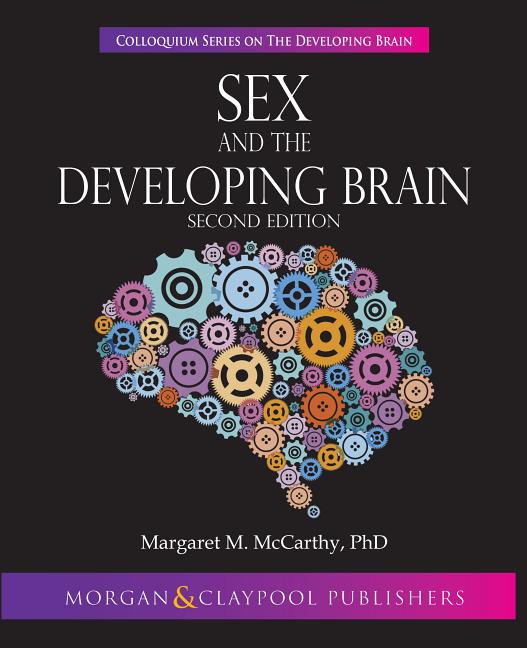
Sex and the Developing Brain: Second Edition - Paperback
$49.99
Choose Option
Paperback
$49.99
$49.95

Hardcover
$69.99
$70.00
Quantity
01
Pay over time for orders over $35.00 with
Offers & Perks
Earn 49 points with this purchase
Added to your rewards balance after checkout.
100 points welcome bonus
Create an account and start with extra points.
Availability:In StockContributor:Margaret M. McCarthySeries:Colloquium the Developing BrainPublish date:8/31/2017Pages:141
Languages:EnglishPublisher:Morgan & ClaypoolISBN-13:9781615047284ISBN-10:161504728XUPC:9781615047284Book Category:ScienceBook Subcategory:Life SciencesBook Topic:Genetics & Genomics, Developmental Biology, NeuroscienceSize:9.25 x 7.50 x 0.33 inchesWeight:0.272Product ID:SC99A2PEG9
The brains of males and females, men and women, are different, that is a fact. What is debated is how different and how important are those differences. Sex differences in the brain are determined by genetics, hormones, and experience, which in humans includes culture, society, and parental and peer expectations. The importance of nonbiological variables to sex differences in humans is paramount, making it difficult if not impossible to parse out those contributions that are truly biological. The study of animals provides us the opportunity to understand the magnitude and scope of biologically based sex differences in the brain, and understanding the cellular mechanisms provides us insight into novel sources of brain plasticity. Many sex differences are established during a developmental sensitive window by differences in the hormonal milieu of males versus females. The neonatal testis produces large amounts of testosterone which gains access to the brain and is further metabolized into active androgens and estrogens which modify brain development. Major parameters that are influenced by hormones include neurogenesis, cell death, neurochemical phenotype, axonal and dendritic growth, and synaptogenesis. Variance in these parameters results in sex differences in the size of particular brain regions, the projections between brain regions, and the number and type of synapses within particular brain regions. The cellular mechanisms are both region and endpoint specific and invoke many surprising systems such as prostaglandins, endocannabinoids, and cell death proteins. Epigenetic modifications to the genome both establish and maintain sex differences in the brain and behavior. By understanding when, why, and how sex differences in the brain are established, we may also learn the source of strong gender biases in the relative risk and severity of numerous neurological diseases and disorders of mental health. Boys are much more likely to be diagnosed with autism spectrum or attention and hyperactivity disorders, as well as speech and language deficits, compared to girls. By contrast, women are more likely to suffer from affective disorders, such as depression, anxiety, compulsion, and eating disorders and more likely to experience autoimmune and neurodegenerative disorders. Schizophrenia with an early onset is more common in males but a late-onset version is markedly more frequent in females. Male biased disorders have origins in development while female biased disorders are almost exclusively post-puberty. This remarkable shift in disease risk demands our attention. Novel insights into the biological origins of disease are also gained by comparing and contrasting the same processes in different sexes.
Languages:EnglishPublisher:Morgan & ClaypoolISBN-13:9781615047284ISBN-10:161504728XUPC:9781615047284Book Category:ScienceBook Subcategory:Life SciencesBook Topic:Genetics & Genomics, Developmental Biology, NeuroscienceSize:9.25 x 7.50 x 0.33 inchesWeight:0.272Product ID:SC99A2PEG9
McCarthy, Margaret M.: - University of Maryland School of Medicine
Publisher: Morgan & Claypool
Edition
2nd Edition
Contributor(s)
Author
Free shipping on orders over $75. Standard shipping takes 3-7 business days. Eligible items may be returned within 30 days of delivery. Conditions apply.