
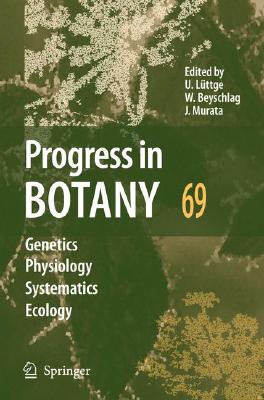
Progress in Botany 69 - Hardcover
$217.99
$219.99
-1%Quantity
01
Pay over time for orders over $35.00 with
Offers & Perks
Earn 217 points with this purchase
Added to your rewards balance after checkout.
100 points welcome bonus
Create an account and start with extra points.
Availability:In StockContributor:Wolfram Beyschlag, Jin MurataSeries:Progress in BotanyTheme:Topical/EcologyPublish date:11/22/2007Pages:479
Languages:EnglishPublisher:SpringerISBN-13:9783540729532ISBN-10:3540729534UPC:9783540729532Book Category:Science, NatureBook Subcategory:Life Sciences, PlantsBook Topic:Botany, EcologySize:9.21 x 6.14 x 1.06 inchesWeight:0.863Product ID:SCDMHS1ZYH
With regard to global climate changes, one of our future challenges will be to develop crop plants that cope better with changing environmental conditions. Abiotic stress is estimated to be the primary cause of crop loss worldwide, with the potential to cause a reduction of more than 50% in the average yield of the main crops. Climatic extremes are known to trigger senescence processes. Many different agriculturally important traits are affected by senescence, like number and quality of seeds, timing of seed set, fruit ripening, etc. . Despite the importance of the sen- cence processes, our knowledge on the regulatory mechanisms of senescence is still poor. However, senescence is not a chaotic breakdown, but an orderly loss of normal cell functions. In contrast to aging processes which have a passive and non-regulated degenerative character (for a review, see Krupinska et al. 2003), senescence is an active and highly regulated process. Senescence can be initiated by exogenous and endogenous triggers. The most important endogenous factors inducing senescence are the age of the leaves and the age and developmental stage of the plant. The leaves of annual plants show a continuous decrease in their photosynthesis rate after full expansion (Batt and Woolhause 1975; Hensel et al. 1993). In fast-aging plants like Arabidopsis, photosynthetic capacity of the leaves decreases by 50% within 4-6 days of full leaf expansion under continuous light conditions (Hensel et al. 1993).
Languages:EnglishPublisher:SpringerISBN-13:9783540729532ISBN-10:3540729534UPC:9783540729532Book Category:Science, NatureBook Subcategory:Life Sciences, PlantsBook Topic:Botany, EcologySize:9.21 x 6.14 x 1.06 inchesWeight:0.863Product ID:SCDMHS1ZYH
Publisher: Springer
Edition
2008 Edition
Contributor(s)
Free shipping on orders over $75. Standard shipping takes 3-7 business days. Eligible items may be returned within 30 days of delivery. Conditions apply.