
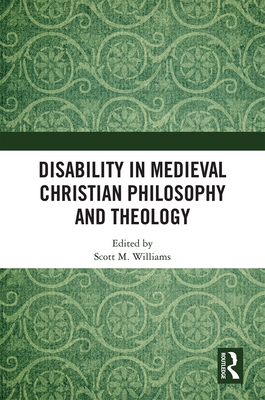
Disability in Medieval Christian Philosophy and Theology - Hardcover
Pay over time for orders over $35.00 with
Offers & Perks
Earn 231 points with this purchase
Added to your rewards balance after checkout.
100 points welcome bonus
Create an account and start with extra points.
This book uses the tools of analytic philosophy and close readings of medieval Christian philosophical and theological texts in order to survey what these thinkers said about what today we call 'disability.' The chapters also compare what these medieval authors say with modern and contemporary philosophers and theologians of disability. This dual approach enriches our understanding of the history of disability in medieval Christian philosophy and theology and opens up new avenues of research for contemporary scholars working on disability.
The volume is divided into three parts. Part One addresses theoretical frameworks regarding disability, particularly on questions about the definition(s) of 'disability' and how disability relates to well-being. The chapters are then divided into two further parts in order to reflect ways that medieval philosophers and theologians theorized about disability. Part Two is on disability in this life, and Part Three is on disability in the afterlife. Taken as a whole, these chapters support two general observations. First, these philosophical theologians sometimes resist Greco-Roman ableist views by means of theological and philosophical anti-ableist arguments and counterexamples. Here we find some surprising disability-positive perspectives that are built into different accounts of a happy human life. We also find equal dignity of all human beings no matter ability or disability. Second, some of the seeds for modern and contemporary ableist views were developed in medieval Christian philosophy and theology, especially with regard to personhood and rationality, an intellectualist interpretation of the imago Dei, and the identification of human dignity with the use of reason.
This volume surveys disability across a wide range of medieval Christian writers from the time of Augustine up to Francisco Suarez. It will be of interest to scholars and graduate students working in medieval philosophy and theology, or disability studies.
Scott M. Williams is an Assistant Professor of philosophy at the University of North Carolina Asheville. He publishes in the areas of medieval theology and philosophy, philosophy of religion, and philosophy of disability. He has published several articles in philosophical theology on the Trinity, and recently published a response article, in Faith and Philosophy, called "In Defense of a Latin Social Trinity: A Response to William Hasker." He is currently writing a book, Henry of Ghent on the Trinity, and is co-editing a forthcoming special issue of the journal TheoLogica on conciliar trinitarianism
Contributor(s)
Free shipping on orders over $75. Standard shipping takes 3-7 business days. Returns accepted within 30 days of purchase.