
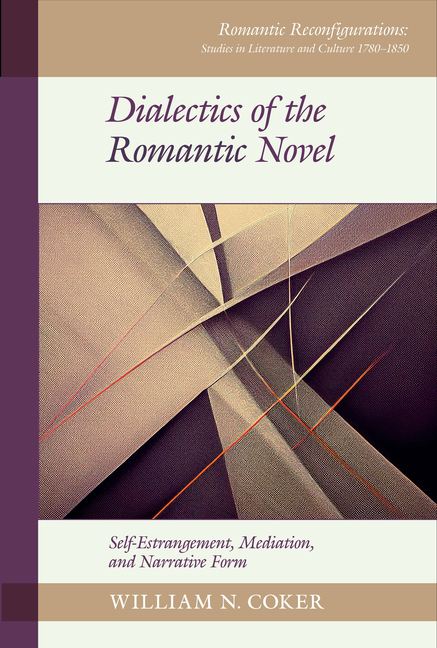
Dialectics of the Romantic Novel: Self-Estrangement, Mediation, and Narrative Form - Hardcover
Pay over time for orders over $35.00 with
Offers & Perks
Earn 175 points with this purchase
Added to your rewards balance after checkout.
100 points welcome bonus
Create an account and start with extra points.
Ebook available to libraries exclusively as part of the JSTOR Path to Open initiative.
Dialectics of the Romantic Novel argues for the centrality of dialectical thought to the emergence of the Romantic-era novel in Europe. In the aftermath of the French Revolution and amidst early rumors of the death of God, the genre's unique capacity to present selves and worlds permeated with contradiction turned it into the arbiter of symbolic meaning in a culture increasingly resistant to singular authority. Novels by Jean-Jacques Rousseau, Jean Paul, Friedrich Hölderlin, Mary Shelley, and Johann Wolfgang Goethe modeled a dialectical subjectivity in which the human being attains selfhood by being other to herself, making mediation necessary for selfhood to flourish.
Tracing the emergence of a dialectical sensibility from Romantic novelists' confrontation with both Rousseau and Immanuel Kant, this book challenges the tendency to identify "irony" as the key to the novel's distinctness. The book makes a case, not for the self's and novel's openness or multiplicity or capacity for self-revision, but more specifically for their ability to embody contradiction. Mediating contradiction by the temporal, figurative, and architectonic means of novelistic narrative, the Romantic novel manifests a dialectical imagination, which posits that the dynamism of the subject resides in her self-alienation.
Contributor(s)
Author
Free shipping on orders over $75. Standard shipping takes 3-7 business days. Eligible items may be returned within 30 days of delivery. Conditions apply.