
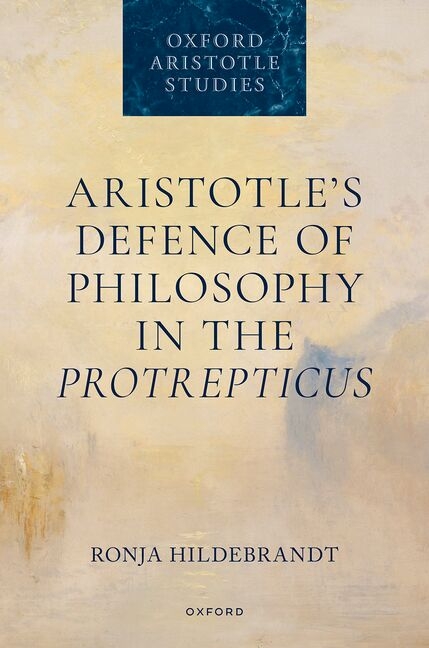
Aristotle's Defence of Philosophy in the Protrepticus - Hardcover
$125.99
Quantity
01
Pay over time for orders over $35.00 with
Offers & Perks
Earn 125 points with this purchase
Added to your rewards balance after checkout.
100 points welcome bonus
Create an account and start with extra points.
Availability:In StockContributor:Ronja HildebrandtSeries:Oxford Aristotle StudiesTheme:Chronological Period/Ancient (To 499 A.D.)Publish date:7/16/2026Pages:288
Languages:EnglishPublisher:Oxford University PressISBN-13:9780198889908ISBN-10:0198889909UPC:9780198889908Book Category:PhilosophyBook Subcategory:History & Surveys, Ethics & Moral Philosophy, EpistemologyBook Topic:Ancient & ClassicalSize:9.44 x 6.55 x 0.93 inchesWeight:0.604Product ID:SCX6Y2TS7D
Why should we study philosophy? Is it too abstract or too remote from real life to be of any value? Aristotle's Defence of Philosophy in the Protrepticus examines Aristotle's response to such questions. Based on an examination of the fragments his Protrepticus, Ronja Hildebrandt argues that Aristotle defends philosophy--understood as knowledge of the fundamental causes of nature and of happiness--on the basis of both its utility and its intrinsic value. Philosophy is useful because it enables us to become authoritative judges of how to live well, equipping us to reconsider social conventions and chart our own courses. But it also has intrinsic value: doing philosophy is either identical with happiness or a part of it, as it is the human function (ergon) and end (telos). For this reason, Aristotle claims, only those who philosophize truly enjoy living a human life. Hildebrandt challenges the common view that the Protrepticus reflects an early, merely Platonic phase of Aristotle's thought, showing instead that it articulates positions that are consistent with, and often illuminate, central themes in other of his extant works. This book thus provides a deeper understanding of questions such as whether Aristotle's view of happiness is monistic or inclusive, how he would respond to common objections against his ergon or function arguments, how he justifies teleology in nature, what role practical wisdom plays in virtuous action, and how he conceives of degrees of goodness, being, and living.
Languages:EnglishPublisher:Oxford University PressISBN-13:9780198889908ISBN-10:0198889909UPC:9780198889908Book Category:PhilosophyBook Subcategory:History & Surveys, Ethics & Moral Philosophy, EpistemologyBook Topic:Ancient & ClassicalSize:9.44 x 6.55 x 0.93 inchesWeight:0.604Product ID:SCX6Y2TS7D
Ronja Hildebrandt, TU Dortmund University Ronja Hildebrandt is Assistant Professor in the Department of Philosophy and Political Science at Technische Universität Dortmund. She obtained her PhD in Philosophy from Humboldt-Universität zu Berlin, and has held research posts at the Department of Philosophy at Princeton University. Her research focuses on Ancient Greek and Roman philosophy, especially Aristotle, and extends to ethics and political philosophy.
Publisher: Oxford University Press
Contributor(s)
Author
Free shipping on orders over $75. Standard shipping takes 3-7 business days. Returns accepted within 30 days of purchase.