
Work, Social Status, and Gender in Post-Slavery Mauritania - Paperback
Pay over time for orders over $35.00 with
Offers & Perks
Earn 32 points with this purchase
Added to your rewards balance after checkout.
100 points welcome bonus
Create an account and start with extra points.
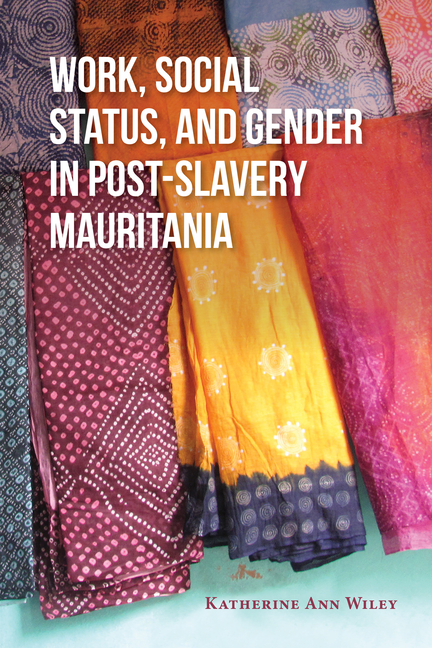
Although slavery was legally abolished in 1981 in Mauritania, its legacy lives on in the political, economic, and social discrimination against ex-slaves and their descendants. Katherine Ann Wiley examines the shifting roles of Muslim Ḥarāṭīn (ex-slaves and their descendants) women, who provide financial support for their families. Wiley uses economic activity as a lens to examine what makes suitable work for women, their trade practices, and how they understand and assert their social positions, social worth, and personal value in their everyday lives. She finds that while genealogy and social hierarchy contributed to status in the past, women today believe that attributes such as wealth, respect, and distance from slavery help to establish social capital. Wiley shows how the legacy of slavery continues to constrain some women even while many of them draw on neoliberal values to connect through kinship, friendship, and professional associations. This powerful ethnography challenges stereotypical views of Muslim women and demonstrates how they work together to navigate social inequality and bring about social change.
Katherine Ann Wiley is an Assistant Professor of Anthropology at Pacific Lutheran University. Her work has appeared in Africa and Africa Today.
Contributor(s)
Author
Free shipping on orders over $75. Standard shipping takes 3-7 business days. Eligible items may be returned within 30 days of delivery. Conditions apply.