
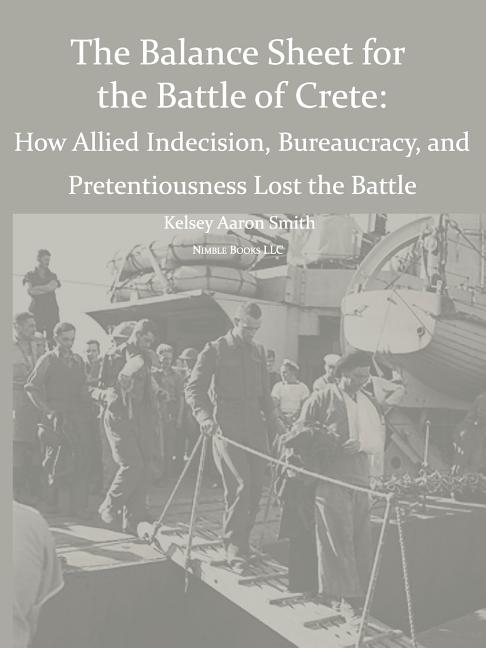
Why the Allies Lost the Battle of Crete: How Allied Indecision, Bureaucracy, and Pretentiousness Lost the Battle - Paperback
Pay over time for orders over $35.00 with
Offers & Perks
Earn 19 points with this purchase
Added to your rewards balance after checkout.
100 points welcome bonus
Create an account and start with extra points.
Alied strategy was unsuccessful for two reasons. First, the development of Allied strategy resembled that of a pinball game rather than a deliberative, objectives-based process. Rather than forcing the Germans into a predictable move, counter-move contest, the indecisive Allied strategy caused them to out-maneuver themselves resulting in available Allied combat power going unemployed. Second, an overall lack of unity of command plagued the implementation of strategies. Polliticians, the General Staff and subordinate commanders who disagreed with the strategy did their best to derail or not support it. Not only were the Allies strategically out-maneuvered due to these factors, but the consequences of these strategic errors were visited on operational and tactical units in dramatic fashion. The operational ommanders tasked to provide forces, equipment, resources and support to the effort considered Greece and eventually Crete economy of force operations and released resources without reducing their own capabilities.
The Allies failed to clearly define, articulate, and implement the strategic objectives of their entry into Greece. As a result, subordinate commanders were unable to create operational level unity of command and to synchronize their efforts to achieve the Allied objectives. Consequently, CreForce and Freyberg were unable to obtain, organize and synchronize the elements of combat power necessary to defend Crete and lost the battle.
Free shipping on orders over $75. Standard shipping takes 3-7 business days. Eligible items may be returned within 30 days of delivery. Conditions apply.