
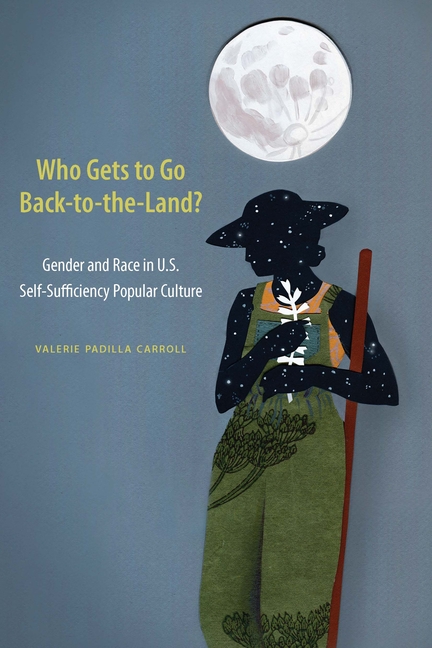
Who Gets to Go Back-To-The-Land?: Gender and Race in U.S. Self-Sufficiency Popular Culture - Hardcover
$65.99
Quantity
01
Pay over time for orders over $35.00 with
Offers & Perks
Earn 65 points with this purchase
Added to your rewards balance after checkout.
100 points welcome bonus
Create an account and start with extra points.
Availability:In StockContributor:Valerie Padilla CarrollTheme:Chronological Period/20th Century, Topical/FamilyPublish date:12/1/2022Pages:254
Languages:EnglishPublisher:University of Nebraska PressISBN-13:9781496215000ISBN-10:1496215001UPC:9781496215000Book Category:Social Science, HistoryBook Subcategory:Gender Studies, United States, Media StudiesBook Topic:20th CenturySize:9.00 x 6.00 x 0.69 inchesWeight:0.545Product ID:SCQ8EJN1VT
In Who Gets to Go Back-to-the-Land?, Valerie Padilla Carroll examines a variety of media from the last century that proselytized self-sufficiency as a solution to the economic instability, environmental destruction, and perceived disintegration of modern America. In the early twentieth century, books already advocated an escape for the urban, white-collar male. The suggestion became more practical during the Great Depression, and magazines pushed self-sufficiency lifestyles. By the 1970s, the idea was reborn in newsletters and other media as a radical response to a damaged world, allowing activists to promote the simple life as environmental, gender, and queer justice. At the century's end, a great variety of media promoted self-sufficiency as the solution to a different set of problems, from survival at the millennium to wanderlust of millennials.
Nevertheless, these utopian narratives are written overwhelmingly for a particular audience--one that is white, male, and white-collar. Padilla Carroll's archival research of the books, newspapers, magazines, newsletters, websites, blogs, and videos promoting the life of the agrarian smallholder illuminates how embedded race, class, gender, and heteronormative dogmas in these texts reinforce dominant power ideologies and ignore the experiences of marginalized people. Still, Padilla Carroll also highlights how those left out have continued to demand inclusion by telling their own stories of self-sufficiency, rewriting and reimagining the movement to be collaborative, inclusive, and rooted in both human and ecological justice.
Nevertheless, these utopian narratives are written overwhelmingly for a particular audience--one that is white, male, and white-collar. Padilla Carroll's archival research of the books, newspapers, magazines, newsletters, websites, blogs, and videos promoting the life of the agrarian smallholder illuminates how embedded race, class, gender, and heteronormative dogmas in these texts reinforce dominant power ideologies and ignore the experiences of marginalized people. Still, Padilla Carroll also highlights how those left out have continued to demand inclusion by telling their own stories of self-sufficiency, rewriting and reimagining the movement to be collaborative, inclusive, and rooted in both human and ecological justice.
Languages:EnglishPublisher:University of Nebraska PressISBN-13:9781496215000ISBN-10:1496215001UPC:9781496215000Book Category:Social Science, HistoryBook Subcategory:Gender Studies, United States, Media StudiesBook Topic:20th CenturySize:9.00 x 6.00 x 0.69 inchesWeight:0.545Product ID:SCQ8EJN1VT
Valerie Padilla Carroll is an associate professor of gender, women, and sexuality studies at Kansas State University.
Publisher: University of Nebraska Press
Contributor(s)
Author
Free shipping on orders over $75. Standard shipping takes 3-7 business days. Eligible items may be returned within 30 days of delivery. Conditions apply.