
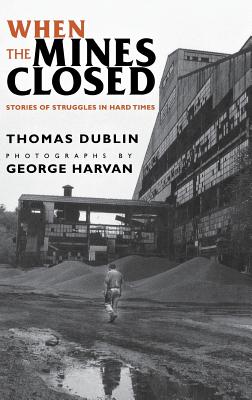
When the Mines Closed - Hardcover
Pay over time for orders over $35.00 with
Offers & Perks
Earn 159 points with this purchase
Added to your rewards balance after checkout.
100 points welcome bonus
Create an account and start with extra points.
The anthracite region of northeastern Pennsylvania, five hundred square miles of rugged hills stretching between Tower City and Carbondale, harbored coal deposits that once heated virtually all the homes and businesses in Eastern cities. At its peak during World War I, the coal industry here employed 170,000 miners, and supported almost 1,000,000 people. Today, with coal workers numbering 1,500, only 5,000 people depend on the industry for their livelihood. Between these two points in time lies a story of industrial decline, of working people facing incremental and cataclysmic changes in their world. When the Mines Closed tells this story in the words of men and women who experienced these dramatic changes and in more than eighty photographs of these individuals, their families, and the larger community.Award-winning historian Thomas Dublin interviewed a cross-section of residents and migrants from the region, who gave their own accounts of their work and family lives before and after the mines closed. Most of the narrators, six men and seven women, came of age during the Great Depression and entered area mines or, in the case of the women, garment factories, in their teens. They describe the difficult choices they faced, and the long-standing ethnic, working-class values and traditions they drew upon, when after World War II the mines began to shut down. Some left the region, others commuted to work at a distance, still others struggled to find employment locally.The photographs taken by George Harvan, a lifelong resident of the area and the son of a Slovak-born coal miner, document residents' lives over the course of fifty years. Dublin's introductory essay offers a brief history of anthracite mining and the region and establishes a broader interpretive framework for the narratives and photographs.
Thomas Dublin is Professor of History at the State University of New York at Binghamton. His many books include Transforming Women's Work: New England Lives in the Industrial Revolution, also from Cornell. George Harvan is Chief Photographer at the Valley Gazette, Lansford, Pennsylvania. His photographs of anthracite miners have been widely displayed, including at the George Eastman House in Rochester, New York, and the Kodak Exhibition Center in New York's Grand Central Station.
Contributor(s)
Author
Free shipping on orders over $75. Standard shipping takes 3-7 business days. Eligible items may be returned within 30 days of delivery. Conditions apply.