
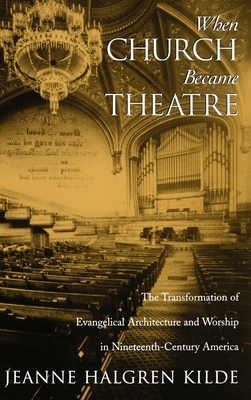
When Church Became Theatre: The Transformation of Evangelical Architecture and Worship in Nineteenth-Century America - Hardcover
$114.99
Quantity
01
Pay over time for orders over $35.00 with
Offers & Perks
Earn 114 points with this purchase
Added to your rewards balance after checkout.
100 points welcome bonus
Create an account and start with extra points.
Availability:In StockContributor:Jeanne Halgren KildeTheme:Chronological Period/19th Century, Religious Orientation/Christian, Theometrics/AcademicPublish date:7/11/2002Pages:328
Languages:EnglishPublisher:Oxford University PressISBN-13:9780195143416ISBN-10:0195143418UPC:9780195143416Book Category:History, ReligionBook Subcategory:Christian Ministry, Institutions & OrganizationsBook Topic:EvangelismSize:9.54 x 6.50 x 0.95 inchesWeight:0.608Product ID:SCMCF4H4QE
For nearly eighteen centuries, two fundamental spatial plans dominated Christian architecture: the basilica and the central plan. In the 1880s, however, profound socio-economic and technological changes in the United States contributed to the rejection of these traditions and the development of a radically new worship building, the auditorium church. When Church Became Theatre focuses on this radical shift in evangelical Protestant architecture and links it to changes in worship style and religious mission. The auditorium style, featuring a prominent stage from which rows of pews radiated up a sloping floor, was derived directly from the theatre, an unusual source for religious architecture but one with a similar goal-to gather large groups within range of a speaker's voice. Theatrical elements were prominent; many featured proscenium arches, marquee lighting, theatre seats, and even opera boxes. Examining these churches and the discussions surrounding their development, Jeanne Halgren Kilde focuses on how these buildings helped congregations negotiate supernatural, social, and personal power. These worship spaces underscored performative and entertainment aspects of the service and in so doing transformed relationships between clergy and audiences. In auditorium churches, the congregants' personal and social power derived as much from consumerism as from piety, and clerical power lay in dramatic expertise rather than connections to social institutions. By erecting these buildings, argues Kilde, middle class religious audiences demonstrated the move toward a consumer-oriented model of religious participation that gave them unprecedented influence over the worship experience and church mission.
Languages:EnglishPublisher:Oxford University PressISBN-13:9780195143416ISBN-10:0195143418UPC:9780195143416Book Category:History, ReligionBook Subcategory:Christian Ministry, Institutions & OrganizationsBook Topic:EvangelismSize:9.54 x 6.50 x 0.95 inchesWeight:0.608Product ID:SCMCF4H4QE
Jeanne Halgren Kilde holds a Ph.D. in American Studies from the University of Minnesota. She is currently Visiting Assistant Professor of Religious Studies at Macalester College, and Co-director of Macalester's Lilly Project for Work, Ethics, and Vocation.
Publisher: Oxford University Press
Contributor(s)
Author
Free shipping on orders over $75. Standard shipping takes 3-7 business days. Returns accepted within 30 days of purchase.