
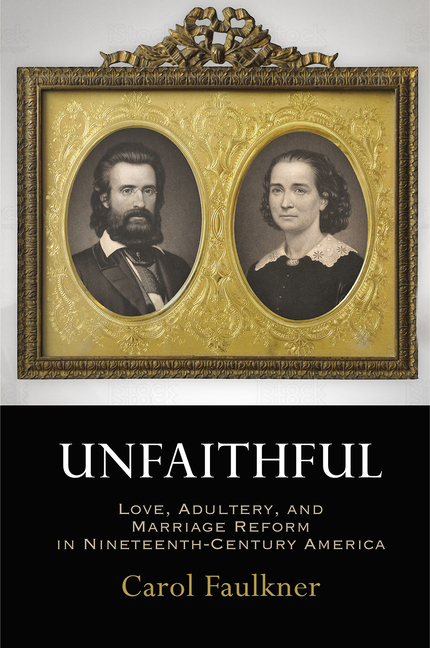
Unfaithful: Love, Adultery, and Marriage Reform in Nineteenth-Century America - Hardcover
Pay over time for orders over $35.00 with
Offers & Perks
Earn 58 points with this purchase
Added to your rewards balance after checkout.
100 points welcome bonus
Create an account and start with extra points.
In her 1855 fictionalized autobiography, Mary Gove Nichols told the story of her emancipation from her first unhappy marriage, during which her husband controlled her body, her labor, and her daughter. Rather than the more familiar metaphor of prostitution, Nichols used adultery to define loveless marriages as a betrayal of the self, a consequence far more serious than the violation of a legal contract. Nichols was not alone. In Unfaithful, Carol Faulkner places this view of adultery at the center of nineteenth-century efforts to redefine marriage as a voluntary relationship in which love alone determined fidelity.
After the Revolution, Americans understood adultery as a sin against God and a crime against the people. A betrayal of marriage vows, adultery was a cause for divorce in most states as well as a basis for civil suits. Faulkner depicts an array of nineteenth-century social reformers who challenged the restrictive legal institution of marriage, redefining adultery as a matter of individual choice and love. She traces the beginning of this redefinition of adultery to the evangelical ferment of the 1830s and 1840s, when perfectionists like John Humphrey Noyes, founder of the Oneida Community, concluded that marriage obstructed the individual's relationship to God. In the 1840s and 1850s, spiritualist, feminist, and free love critics of marriage fueled a growing debate over adultery and marriage by emphasizing true love and consent. After the Civil War, activists turned the act of adultery into a form of civil disobedience, culminating in Victoria Woodhull's publicly charging the Reverend Henry Ward Beecher with marital infidelity. Unfaithful explores how nineteenth-century reformers mobilized both the metaphor and the act of adultery to redefine marriage between 1830 and 1880 and the ways in which their criticisms of the legal institution contributed to a larger transformation of marital and gender relations that continues to this day.Contributor(s)
Author
Free shipping on orders over $75. Standard shipping takes 3-7 business days. Eligible items may be returned within 30 days of delivery. Conditions apply.