
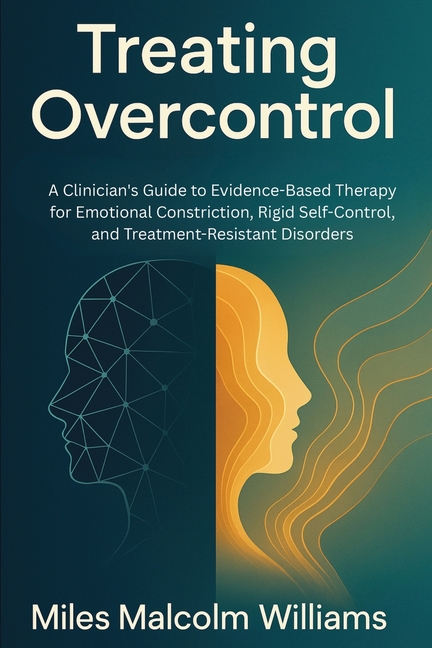
Treating Overcontrol: A Clinician's Guide to Evidence-Based Therapy for Excessive Self-Control, Emotional Constriction, and Treatment-Resistant Disord - Paperback
Pay over time for orders over $35.00 with
Offers & Perks
Earn 13 points with this purchase
Added to your rewards balance after checkout.
100 points welcome bonus
Create an account and start with extra points.
Why do some clients do everything right and never improve?
They follow every rule. They maintain rigid self-discipline. They suppress emotion, avoid conflict, and present a controlled exterior to the world. Yet beneath the surface, they experience profound loneliness, emotional numbness, and social disconnection that standard therapy cannot reach.
Traditional cognitive-behavioral approaches and emotion regulation therapies target impulsivity, emotional dysregulation, and behavioral undercontrol. They consistently fail clients presenting with the opposite pattern: excessive self-control, emotional constriction, rigid rule-following, and deep social isolation. These treatment-resistant individuals represent a clinical population that most therapy models were never designed to help.
This clinical manual provides mental health professionals with theoretical foundations, practical protocols, and reproducible tools for treating disorders of overcontrol - a transdiagnostic construct underlying some of the most difficult presentations in clinical practice.
Foundations and Assessment - The opening section establishes overcontrol as a transdiagnostic framework. Clinicians learn to identify five core overcontrolled behavioral patterns: inhibited emotional expression, hyper-detailed and cautious behavior, rigid rule-governed responding, aloof and distant relating, and high social comparison with envy. Structured assessment protocols help identify overcontrol across presentations including restrictive eating disorders, chronic and refractory depression, and obsessive-compulsive personality disorder.
Treatment Structure - A complete 30-week treatment program integrates four components: weekly individual therapy, group skills training, between-session consultation, and therapist consultation team. A four-session orientation phase provides session-by-session guidance covering clinical assessment, valued goals identification, the biosocial theory of overcontrol, and social signaling as the primary mechanism of therapeutic change.
Core Skills Curriculum - Twenty evidence-based skills are presented with detailed teaching strategies, clinical examples, and session-by-session protocols. Skills target cognitive flexibility, self-reflection practices, social safety activation, authentic emotional expression, and interpersonal effectiveness - all adapted specifically for emotionally constricted and rigidly controlled clients.
The Therapeutic Relationship - Detailed guidance covers the distinctive therapeutic stance required for overcontrolled clients: warmth combined with playful irreverence, strategic use of therapist self-disclosure, and a structured protocol for repairing alliance ruptures. Clinical challenges unique to overcontrolled presentations - including disguised compliance, excessive agreeableness, and the paradox of the "good patient" who never improves - are addressed with concrete intervention strategies.
Clinical Evidence - Two extended case studies follow composite clients through complete treatment courses. The first demonstrates application with a restrictive eating disorder presentation. The second illustrates treatment of chronic, medication-resistant depression. Both include outcome data from published clinical trials demonstrating significant remission rates in treatment completers.
Implementation - Practical guidance addresses training pathways, clinical supervision requirements, program development, and adaptations for diverse settings. Emerging applications include neurodivergent populations, adolescent adaptations, treatment-resistant anxiety, and forensic settings.
Free shipping on orders over $75. Standard shipping takes 3-7 business days. Eligible items may be returned within 30 days of delivery. Conditions apply.