
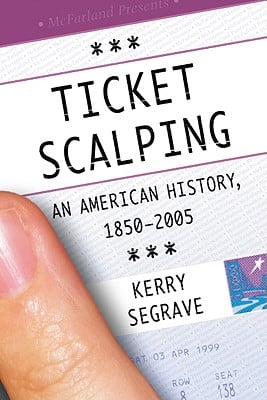
Ticket Scalping: An American History, 1850-2005 - Paperback
Pay over time for orders over $35.00 with
Offers & Perks
Earn 43 points with this purchase
Added to your rewards balance after checkout.
100 points welcome bonus
Create an account and start with extra points.
Ticket scalping is as much an American staple as apple pie. Beginning as early as the mid-1800s, scalpers, known as "sidewalk men," were charging all the traffic would bear for event tickets. Although these speculators were generally viewed as pariahs and public opinion was against the practice, legal attempts to limit their activities were far from successful. Boston enacted laws as early as 1873, while Pennsylvania followed suit in 1884. Still, such measures did little good since some laws were declared unconstitutional and, for the ones that were upheld, the fines were negligible with jail time rarely served. Over the years, as moral objections to scalping dimmed, the public became more tolerant as the practice became increasingly prevalent. By the 1990s, the capitalist mantras of free market and economic principles of supply and demand were even being used to justify the practice.
This volume details the ways in which scalping has changed over the years from a one-man business to an agency-controlled enterprise, from performances by Jenny Lind to Billy Joel. The book examines the general situation, public opinion and legal perception of scalping for four distinct periods: 1850-1899; 1900-1917; 1918-1949 and 1950-2005. Emphasis is placed on the ways in which public and legal perception of the practice has evolved over this period. Scalping, slowly gaining a more positive status, has become more accepted as part of the economic practice of free markets.
Contributor(s)
Author
Free shipping on orders over $75. Standard shipping takes 3-7 business days. Eligible items may be returned within 30 days of delivery. Conditions apply.