
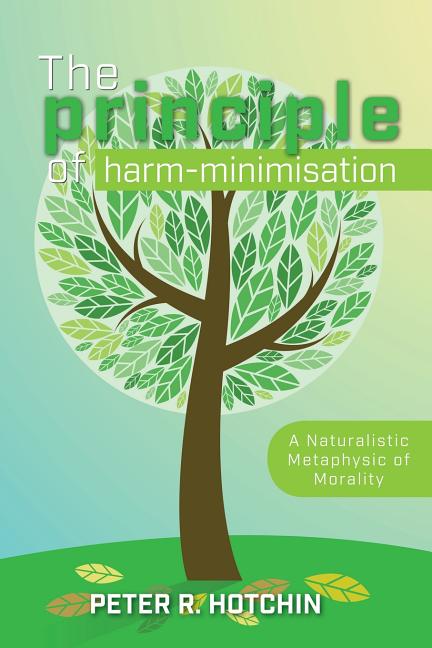
The Principle of Harm-Minimisation: A Naturalistic Metaphysic of Morality - Paperback
$12.99
$14.95
-13%Quantity
01
Pay over time for orders over $35.00 with
Offers & Perks
Earn 12 points with this purchase
Added to your rewards balance after checkout.
100 points welcome bonus
Create an account and start with extra points.
Languages:EnglishPublisher:Cilento PublishingISBN-13:9780994560377ISBN-10:0994560370UPC:9780994560377Book Category:PhilosophyBook Subcategory:Ethics & Moral PhilosophySize:9.00 x 6.00 x 0.56 inchesWeight:0.359Product ID:SCDJTF3PJ0
Is it really the case that all would be permissible if there were no God? Open slather, where behaviour that people would normally describe as immoral goes unchecked, and possibly pervades. The notion is generally attributed to Dostoevsky's character Ivan Karamazov, and there are many who would agree with it. But not everyone. In this book Peter Hotchin provides reasons for believing that morality has no need of supernatural support. Drawing on the ideas of thinkers past and present, from diverse fields, he argues for the existence of a relationship between order, needs, harm, and morality. Human needs, he maintains, emanate from a fundamental need for order, and harm is done when that need is violated. With immorality consisting in wilful or careless harm-doing by human beings, the proposed relationship establishes non-supernaturalistic grounds in which morality can be anchored. The same principles are also shown to provide a basis for an ethics that encompass non-human animals and the environment.
Languages:EnglishPublisher:Cilento PublishingISBN-13:9780994560377ISBN-10:0994560370UPC:9780994560377Book Category:PhilosophyBook Subcategory:Ethics & Moral PhilosophySize:9.00 x 6.00 x 0.56 inchesWeight:0.359Product ID:SCDJTF3PJ0
Peter Hotchin has lived for most of his life in suburban Melbourne. An enduring interest in literature and philosophical studies took hold of him in his late teens, when his eyes were opened to the world of ideas by such luminaries of the time as Albert Camus, Boris Pasternak, and J. D. Salinger. After retiring from a career as an accountant in commerce and university administration, he completed his formal education with research in the fields of aesthetics and ethics, culminating in Masters and PhD degrees from Deakin University. The Principle of Harm-Minimisation is his first book. In concert with Epicurus, he believes that one is neither ever too young nor ever too old for philosophy.
Publisher: Cilento Publishing
Contributor(s)
Author
Free shipping on orders over $75. Standard shipping takes 3-7 business days. Returns accepted within 30 days of purchase.