
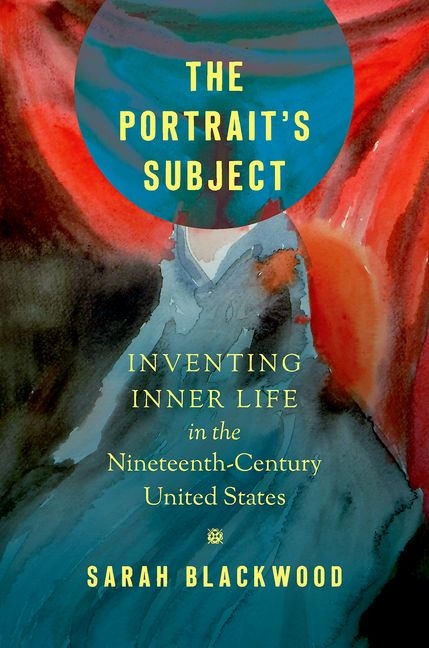
The Portrait's Subject: Inventing Inner Life in the Nineteenth-Century United States - Paperback
$34.99
Choose Option
Paperback
$34.99
$34.95

Hardcover
$115.99
Quantity
01
Pay over time for orders over $35.00 with
Offers & Perks
Earn 34 points with this purchase
Added to your rewards balance after checkout.
100 points welcome bonus
Create an account and start with extra points.
Availability:In StockContributor:Sarah BlackwoodSeries:Studies in United States CultureTheme:Chronological Period/19th CenturyPublish date:12/16/2019Pages:216
Languages:EnglishPublisher:University of North Carolina PressISBN-13:9781469652597ISBN-10:1469652595UPC:9781469652597Book Category:Literary Criticism, History, ArtBook Subcategory:American, United States, Subjects & ThemesBook Topic:19th CenturySize:9.21 x 6.14 x 0.49 inchesWeight:0.336Product ID:SC122EH2ZD
Between the invention of photography in 1839 and the end of the nineteenth century, portraiture became one of the most popular and common art forms in the United States. In The Portrait's Subject, Sarah Blackwood tells a wide-ranging story about how images of human surfaces came to signal expressions of human depth during this era in paintings, photographs, and illustrations, as well as in literary and cultural representations of portrait making and viewing. Combining visual theory, literary close reading, and archival research, Blackwood examines portraiture's changing symbolic and aesthetic practices, from daguerreotype to X-ray. Portraiture, the book argues, was a provocative art form used by writers, artists, and early psychologists to imagine selfhood as hidden, deep, and in need of revelation, ideas that were then taken up by the developing discipline of psychology.
The Portrait's Subject reveals the underappreciated connections between portraiture's representations of the material human body and developing modern ideas about the human mind. It encouraged figures like Frederick Douglass, Nathaniel Hawthorne, Thomas Eakins, Harriet Jacobs, and Henry James to reimagine how we might see inner life, offering a rich array of metaphors and aesthetic approaches that helped reconfigure the relationship between body and mind, exterior and interior. In the end, Blackwood shows how nineteenth-century psychological discourse developed as much through aesthetic fabulation as through scientific experimentation.
The Portrait's Subject reveals the underappreciated connections between portraiture's representations of the material human body and developing modern ideas about the human mind. It encouraged figures like Frederick Douglass, Nathaniel Hawthorne, Thomas Eakins, Harriet Jacobs, and Henry James to reimagine how we might see inner life, offering a rich array of metaphors and aesthetic approaches that helped reconfigure the relationship between body and mind, exterior and interior. In the end, Blackwood shows how nineteenth-century psychological discourse developed as much through aesthetic fabulation as through scientific experimentation.
Languages:EnglishPublisher:University of North Carolina PressISBN-13:9781469652597ISBN-10:1469652595UPC:9781469652597Book Category:Literary Criticism, History, ArtBook Subcategory:American, United States, Subjects & ThemesBook Topic:19th CenturySize:9.21 x 6.14 x 0.49 inchesWeight:0.336Product ID:SC122EH2ZD
Blackwood, Sarah: - Sarah Blackwood is associate professor of English at Pace University.
Publisher: University of North Carolina Press
Contributor(s)
Author
Free shipping on orders over $75. Standard shipping takes 3-7 business days. Eligible items may be returned within 30 days of delivery. Conditions apply.