
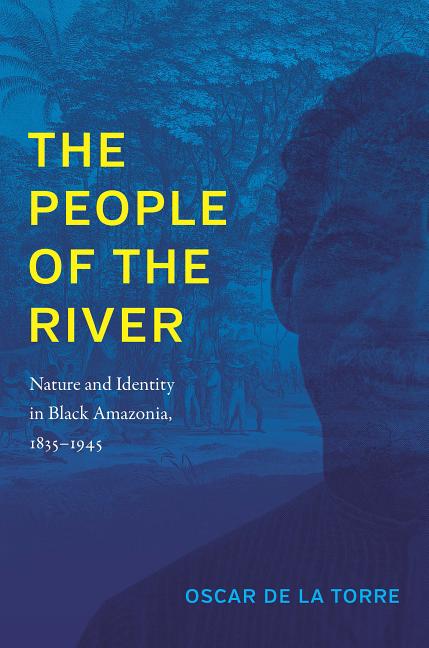
The People of the River: Nature and Identity in Black Amazonia, 1835-1945 - Paperback
$39.99
Quantity
01
Pay over time for orders over $35.00 with
Offers & Perks
Earn 39 points with this purchase
Added to your rewards balance after checkout.
100 points welcome bonus
Create an account and start with extra points.
Availability:In StockContributor:Oscar de la TorreTheme:Cultural Region/Latin America, Ethnic Orientation/African AmericanPublish date:10/15/2018Pages:242
Languages:EnglishPublisher:University of North Carolina PressISBN-13:9781469643243ISBN-10:1469643243UPC:9781469643243Book Category:History, Science, Social ScienceBook Subcategory:Latin America, Environmental Science, Cultural & Ethnic StudiesBook Topic:South America, African American & Black StudiesSize:9.48 x 7.78 x 0.60 inchesWeight:0.35Product ID:SCP7PMSPEP
In this history of the black peasants of Amazonia, Oscar de la Torre focuses on the experience of African-descended people navigating the transition from slavery to freedom. He draws on social and environmental history to connect them intimately to the natural landscape and to Indigenous peoples. Relying on this world as a repository for traditions, discourses, and strategies that they retrieved especially in moments of conflict, Afro-Brazilians fought for autonomous communities and developed a vibrant ethnic identity that supported their struggles over labor, land, and citizenship.
Prior to abolition, enslaved and escaped blacks found in the tropical forest a source for tools, weapons, and trade -- but it was also a cultural storehouse within which they shaped their stories and records of confrontations with slaveowners and state authorities. After abolition, the black peasants' knowledge of local environments continued to be key to their aspirations, allowing them to maintain relationships with powerful patrons and to participate in the protest cycle that led Getúlio Vargas to the presidency of Brazil in 1930. In commonly referring to themselves by such names as "sons of the river," black Amazonians melded their agro-ecological traditions with their emergent identity as political stakeholders.
Prior to abolition, enslaved and escaped blacks found in the tropical forest a source for tools, weapons, and trade -- but it was also a cultural storehouse within which they shaped their stories and records of confrontations with slaveowners and state authorities. After abolition, the black peasants' knowledge of local environments continued to be key to their aspirations, allowing them to maintain relationships with powerful patrons and to participate in the protest cycle that led Getúlio Vargas to the presidency of Brazil in 1930. In commonly referring to themselves by such names as "sons of the river," black Amazonians melded their agro-ecological traditions with their emergent identity as political stakeholders.
Languages:EnglishPublisher:University of North Carolina PressISBN-13:9781469643243ISBN-10:1469643243UPC:9781469643243Book Category:History, Science, Social ScienceBook Subcategory:Latin America, Environmental Science, Cultural & Ethnic StudiesBook Topic:South America, African American & Black StudiesSize:9.48 x 7.78 x 0.60 inchesWeight:0.35Product ID:SCP7PMSPEP
Oscar de la Torre is associate professor of Africana and Latin American studies at the University of North Carolina at Charlotte.
Publisher: University of North Carolina Press
Contributor(s)
Author
Free shipping on orders over $75. Standard shipping takes 3-7 business days. Eligible items may be returned within 30 days of delivery. Conditions apply.