
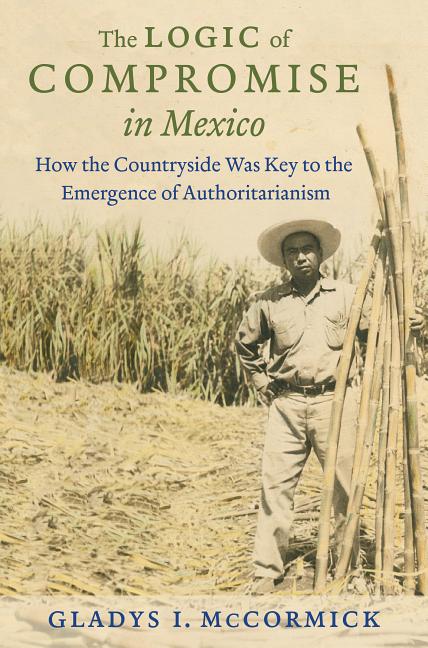
The Logic of Compromise in Mexico: How the Countryside Was Key to the Emergence of Authoritarianism - Paperback
$39.99
Quantity
01
Pay over time for orders over $35.00 with
Offers & Perks
Earn 39 points with this purchase
Added to your rewards balance after checkout.
100 points welcome bonus
Create an account and start with extra points.
Availability:In StockContributor:Gladys I. McCormickTheme:Chronological Period/20th Century, Cultural Region/MexicanPublish date:4/11/2016Pages:300
Languages:EnglishPublisher:University of North Carolina PressISBN-13:9781469627748ISBN-10:1469627744UPC:9781469627748Book Category:History, Political ScienceBook Subcategory:Latin America, History & TheoryBook Topic:MexicoSize:9.28 x 6.06 x 0.80 inchesWeight:0.44Product ID:SCH3VPJG22
In this political history of twentieth-century Mexico, Gladys McCormick argues that the key to understanding the immense power of the long-ruling Partido Revolucionario Institucional (PRI) is to be found in the countryside. Using newly available sources, including declassified secret police files and oral histories, McCormick looks at large-scale sugar cooperatives in Morelos and Puebla, two major agricultural regions that serve as microcosms of events across the nation. She argues that Mexico's rural peoples, despite shouldering much of the financial burden of modernization policies, formed the PRI regime's most fervent base of support.
McCormick demonstrates how the PRI exploited this support, using key parts of the countryside to test and refine instruments of control -- including the regulation of protest, manipulation of collective memories of rural communities, and selective application of violence against critics -- that it later employed in other areas, both rural and urban. With three peasant leaders, brothers named Rubén, Porfirio, and Antonio Jaramillo, at the heart of her story, McCormick draws a capacious picture of peasant activism, disillusion, and compromise in state formation, revealing the basis for an enduring political culture dominated by the PRI. On a broader level, McCormick demonstrates the connections among modern state building in Latin America, the consolidation of new forms of authoritarian rule, and the deployment of violence on all sides.
McCormick demonstrates how the PRI exploited this support, using key parts of the countryside to test and refine instruments of control -- including the regulation of protest, manipulation of collective memories of rural communities, and selective application of violence against critics -- that it later employed in other areas, both rural and urban. With three peasant leaders, brothers named Rubén, Porfirio, and Antonio Jaramillo, at the heart of her story, McCormick draws a capacious picture of peasant activism, disillusion, and compromise in state formation, revealing the basis for an enduring political culture dominated by the PRI. On a broader level, McCormick demonstrates the connections among modern state building in Latin America, the consolidation of new forms of authoritarian rule, and the deployment of violence on all sides.
Languages:EnglishPublisher:University of North Carolina PressISBN-13:9781469627748ISBN-10:1469627744UPC:9781469627748Book Category:History, Political ScienceBook Subcategory:Latin America, History & TheoryBook Topic:MexicoSize:9.28 x 6.06 x 0.80 inchesWeight:0.44Product ID:SCH3VPJG22
McCormick, Gladys I.: - Gladys McCormick is assistant professor of history at Syracuse University.
Publisher: University of North Carolina Press
Contributor(s)
Author
Free shipping on orders over $75. Standard shipping takes 3-7 business days. Eligible items may be returned within 30 days of delivery. Conditions apply.