
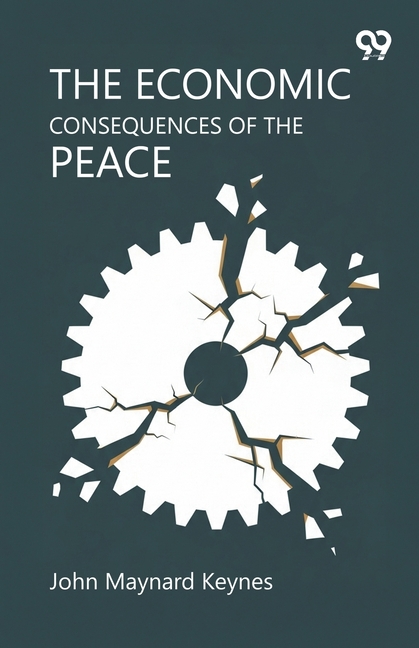
The Economic Consequences Of The Peace - Paperback
$12.99
$17.99
-28%Choose Option
Paperback
$12.99
$17.99

Paperback
$7.99

Paperback
$13.99

Hardcover
$31.99
$33.99

Paperback
$13.99

Paperback
$6.99
$8.00

Hardcover
$18.99
$19.95

Paperback
$9.99

Paperback
$6.99
$7.49

The Economic Consequences of the Peace
$24.99

The Economic Consequences of the Peace
$6.99

The Economic Consequences of the Peace
$11.99

Paperback
$31.99
$33.95

Paperback
$11.99
$12.00

Hardcover
$31.99
$33.99
Quantity
01
Pay over time for orders over $35.00 with
Offers & Perks
Earn 12 points with this purchase
Added to your rewards balance after checkout.
100 points welcome bonus
Create an account and start with extra points.
Availability:In StockContributor:John Maynard KeynesTheme:Chronological Period/1900-1919Publish date:10/1/2025Pages:174
Languages:EnglishPublisher:Double 9 BooksISBN-13:9789373401850ISBN-10:9373401858UPC:9789373401850Book Category:Political Science, HistoryBook Subcategory:Political Economy, Wars & ConflictsBook Topic:World War ISize:8.50 x 5.50 x 0.40 inchesWeight:0.209Product ID:SCDTDYW1RD
The economic consequences of the peace presents a sharp critique of the post-World War I settlement, focusing on the economic dangers embedded within the Treaty of Versailles. Drawing from first-hand experience at the Paris Peace Conference, the narrative opens with a detailed look at Europe's fragile economic condition in the aftermath of the war. It highlights the risk of continued hardship due to the harsh terms imposed on Germany, particularly the burden of reparations and territorial losses. The author warns that these punitive measures may cripple Germany's economy, sow resentment, and destabilize the broader European economic system. Throughout the text, there is a strong argument that short-term political gains were prioritized over long-term economic recovery, especially by the Allied powers. The book explores themes of justice, economic foresight, and the moral responsibility of victors in shaping peace. It challenges the assumption that political victory guarantees economic stability, instead portraying the peace process as short-sighted and ultimately dangerous. The work serves as both a prophetic warning and a call for more humane and practical post-war economic planning.
Languages:EnglishPublisher:Double 9 BooksISBN-13:9789373401850ISBN-10:9373401858UPC:9789373401850Book Category:Political Science, HistoryBook Subcategory:Political Economy, Wars & ConflictsBook Topic:World War ISize:8.50 x 5.50 x 0.40 inchesWeight:0.209Product ID:SCDTDYW1RD
Keynes, John Maynard: - John Maynard Keynes was born on 5 June 1883 in Cambridge, United Kingdom, to John Neville Keynes and Florence Ada Keynes. He became one of the most influential economic thinkers of the twentieth century. Educated at Eton and then at Cambridge University, he studied mathematics and later economics, becoming a fellow of King's College. In 1915, Keynes joined the British Treasury, contributing to wartime finance and later serving as an advisor during the Paris Peace Conference. His early criticism of the Treaty of Versailles was detailed in his influential book. In the 1930s, during the Great Depression, Keynes developed theories that revolutionized economic thought, advocating for government intervention to stabilize economies. These ideas were foundational to what became known as Keynesian economics. His contributions shaped both academic economics and global economic policy, particularly influencing post-World War II reconstruction. He married Lydia Lopokova in 1925 and remained active in public life until his death on 21 April 1946 at age 62. His legacy continues through those he influenced and the institutions he helped shape.
Publisher: Double 9 Books
Contributor(s)
Author
Free shipping on orders over $75. Standard shipping takes 3-7 business days. Eligible items may be returned within 30 days of delivery. Conditions apply.