
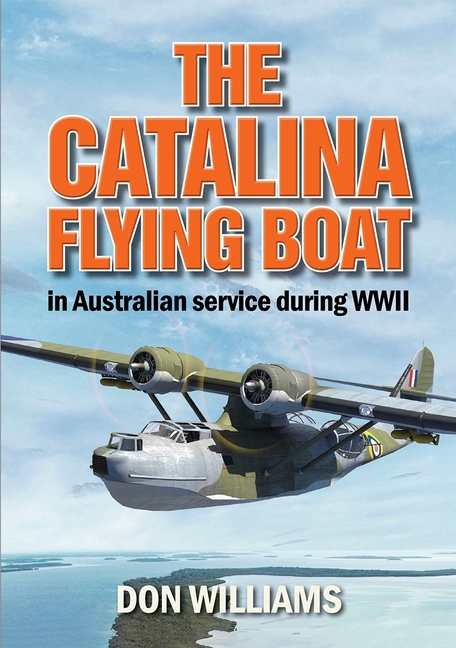
The Catalina Flying Boat in Australian Service During WWII - Paperback
by Don Williams
$28.99
$39.95
-27%Quantity
01
Pay over time for orders over $35.00 with
Offers & Perks
Earn 28 points with this purchase
Added to your rewards balance after checkout.
100 points welcome bonus
Create an account and start with extra points.
Availability:In StockContributor:Don WilliamsTheme:Chronological Period/1940'sPublish date:6/25/2026Pages:132
Languages:EnglishPublisher:Avonmore BooksISBN-13:9781764193757ISBN-10:176419375XUPC:9781764193757Book Category:HistoryBook Subcategory:Military, Wars & ConflictsBook Topic:Aviation & Space, World War II, NavalSize:9.81 x 6.81 x 0.41 inchesWeight:0.4Product ID:SC0S1SNNHH
The Catalina flying boat shaped Pacific War operations, delivering strategic reach, rescue capabilities, and enduring sacrifice in Australian service.
The RAAF effort during the Pacific War was massive, with glamorous types such as Spitfires, P-40s, Beaufighters and Hudsons grabbing most of the attention. While the ungainly Catalina flying boat played an equally important frontline role in the conflict, its contribution remains largely unheralded. Catalinas had unique characteristics and were in the combat zone from the first day of the war to the last, serving in several key roles.
From the earliest desperate weeks of the Pacific War, RAAF Catalinas serving as bombers were one of the few Allied types with the range to strike the key Japanese base of Rabaul. Catalinas also monitored the enemy advance up to the Battle of the Coral Sea and paid a heavy price at the hands of Japanese fighters.
From 1943 the Catalina force began expanding, and eventually 168 of the flying boats were received by the RAAF. These made a major strategic contribution to the war over the next two years, undertaking a successful minelaying campaign that ranged throughout the Netherlands East Indies and beyond as far as the Chinese coast.
Catalinas also provided the RAAF with a valuable air-sea rescue capability, while others serving with Qantas maintained what was the longest regular airline route in the world between Perth and Ceylon.
This is a complete operational history of the Catalina in Australian service during WWII, during which 225 airmen lost their lives.
The RAAF effort during the Pacific War was massive, with glamorous types such as Spitfires, P-40s, Beaufighters and Hudsons grabbing most of the attention. While the ungainly Catalina flying boat played an equally important frontline role in the conflict, its contribution remains largely unheralded. Catalinas had unique characteristics and were in the combat zone from the first day of the war to the last, serving in several key roles.
From the earliest desperate weeks of the Pacific War, RAAF Catalinas serving as bombers were one of the few Allied types with the range to strike the key Japanese base of Rabaul. Catalinas also monitored the enemy advance up to the Battle of the Coral Sea and paid a heavy price at the hands of Japanese fighters.
From 1943 the Catalina force began expanding, and eventually 168 of the flying boats were received by the RAAF. These made a major strategic contribution to the war over the next two years, undertaking a successful minelaying campaign that ranged throughout the Netherlands East Indies and beyond as far as the Chinese coast.
Catalinas also provided the RAAF with a valuable air-sea rescue capability, while others serving with Qantas maintained what was the longest regular airline route in the world between Perth and Ceylon.
This is a complete operational history of the Catalina in Australian service during WWII, during which 225 airmen lost their lives.
Languages:EnglishPublisher:Avonmore BooksISBN-13:9781764193757ISBN-10:176419375XUPC:9781764193757Book Category:HistoryBook Subcategory:Military, Wars & ConflictsBook Topic:Aviation & Space, World War II, NavalSize:9.81 x 6.81 x 0.41 inchesWeight:0.4Product ID:SC0S1SNNHH
Williams, Don: - Don Williams grew up absorbing the host of television programs, books and movies about the titanic World War Two aerial battles in Europe's skies that pervaded Australia in the 1960s and 1970s. His childhood bedroom was filled with models of Spitfires, Hurricanes, Messerschmidts and Stukas.
Later in life, Don sought to better understand the role of Royal Australian Air Force in the Pacific War. He was surprised and disappointed to find that no book telling the complete story of Australia's own wartime emergency fighter, the Commonwealth Aircraft Corporation Boomerang, had been published.
Don decided to fill this gap by writing a book dedicated to the Boomerang. He is also a keen amateur photographer and is pleased that some of his photographs are included in the book.
Sound research and writing were foundations of Don's career as a policy analyst and these skills were further honed when he completed a mature age PhD. He also researched and published an article that identified the Royal Air Force squadron responsible for the death of Nazi Germany's Field Marshal Fedor von Bock, the most senior German officer killed by enemy fire in World War Two.
Later in life, Don sought to better understand the role of Royal Australian Air Force in the Pacific War. He was surprised and disappointed to find that no book telling the complete story of Australia's own wartime emergency fighter, the Commonwealth Aircraft Corporation Boomerang, had been published.
Don decided to fill this gap by writing a book dedicated to the Boomerang. He is also a keen amateur photographer and is pleased that some of his photographs are included in the book.
Sound research and writing were foundations of Don's career as a policy analyst and these skills were further honed when he completed a mature age PhD. He also researched and published an article that identified the Royal Air Force squadron responsible for the death of Nazi Germany's Field Marshal Fedor von Bock, the most senior German officer killed by enemy fire in World War Two.
Publisher: Avonmore Books
Contributor(s)
Author
Free shipping on orders over $75. Standard shipping takes 3-7 business days. Eligible items may be returned within 30 days of delivery. Conditions apply.