
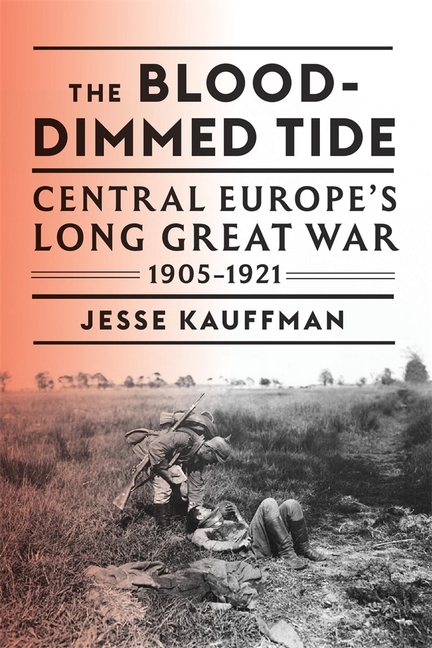
The Blood-Dimmed Tide: Central Europe's Long Great War, 1905-1921 - Hardcover
$30.99
$35.00
-11%Quantity
01
Pay over time for orders over $35.00 with
Offers & Perks
Earn 30 points with this purchase
Added to your rewards balance after checkout.
100 points welcome bonus
Create an account and start with extra points.
Availability:In StockContributor:Jesse KauffmanTheme:Chronological Period/1900-1919, Chronological Period/20th Century, Cultural Region/Central Europe, Cultural Region/Eastern Europe, Cultural Region/Germany, Cultural Region/RussianPublish date:8/11/2026Pages:304
Languages:EnglishPublisher:Harvard University PressISBN-13:9780674972353ISBN-10:067497235XUPC:9780674972353Book Category:HistoryBook Subcategory:Wars & Conflicts, Eastern Europe, RussiaBook Topic:World War I, ImperialSize:8.40 x 5.60 x 1.30 inchesWeight:0.477Product ID:SC5JZ010KK
An expansive narrative of World War I's Eastern Front challenges longstanding analytical frameworks, offering a novel and far-reaching explanation for the emergence of new nation-states from the wreckage of Europe's land empires.
In August 1914, Germany, Austria, and Russia sent millions of soldiers hurtling toward one another across the volatile borderlands of Central Europe. The early battles produced appalling casualties but no decisive triumphs; the Great War's Eastern Front would remain a cauldron of death and destruction for years. And unlike in western Europe, the killing would not end in 1918. With the collapse of the three empires, the front dissolved into a series of overlapping civil, international, and revolutionary wars that would continue for several years more. The connections among prewar, wartime, and postwar events in Central Europe are so strong, argues Jesse Kauffman, that we should analyze the conflict there in new chronological terms: starting with the Russian Revolution in 1905 and continuing until at least the 1921 Treaty of Riga. In particular, The Blood-Dimmed Tide shows that the emergence of sovereign nation-states in postwar Central Europe was neither the inevitable triumph of long-thwarted national ambitions nor a wholly contingent, unforeseeable outcome of the war. Rather, modern states emerged from a conscious decision taken by all the belligerents to encourage the nationalist aspirations of imperial subjects in their enemies' territories. Indeed, the repercussions of Central Europe's long Great War can be felt all the way to today's conflict in Ukraine. It might be time to retire Eric Hobsbawm's famous notion of the "short twentieth century"--1914 to 1991--and to consider instead that the twentieth century has not yet drawn to a close.Languages:EnglishPublisher:Harvard University PressISBN-13:9780674972353ISBN-10:067497235XUPC:9780674972353Book Category:HistoryBook Subcategory:Wars & Conflicts, Eastern Europe, RussiaBook Topic:World War I, ImperialSize:8.40 x 5.60 x 1.30 inchesWeight:0.477Product ID:SC5JZ010KK
Kauffman, Jesse: - Jesse Kauffman is Professor of History at Eastern Michigan University.
Publisher: Harvard University Press
Contributor(s)
Author
Free shipping on orders over $75. Standard shipping takes 3-7 business days. Eligible items may be returned within 30 days of delivery. Conditions apply.