
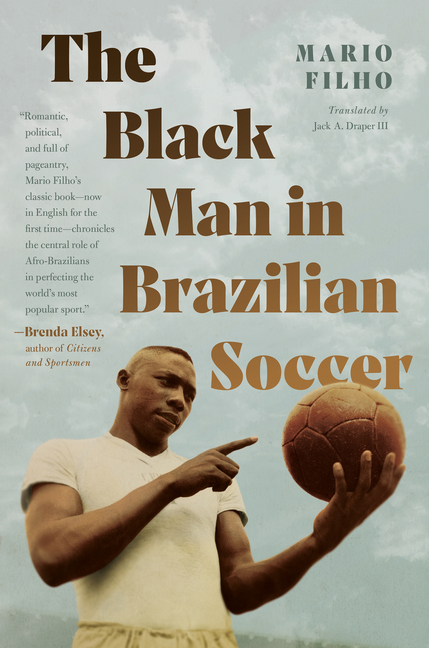
The Black Man in Brazilian Soccer - Hardcover
by Mario Filho
$108.99
Choose Option
Hardcover
$108.99
$99.00

The Black Man in Brazilian Soccer
$27.99
Quantity
01
Pay over time for orders over $35.00 with
Offers & Perks
Earn 108 points with this purchase
Added to your rewards balance after checkout.
100 points welcome bonus
Create an account and start with extra points.
Availability:In StockContributor:Mario Filho, Jack A. III DraperSeries:Latin America in Translation/En Traducción/Em TraduçãoTheme:Cultural Region/Latin America, Ethnic Orientation/MulticulturalPublish date:4/12/2021Pages:368
Languages:EnglishPublisher:University of North Carolina PressISBN-13:9781469636979ISBN-10:1469636972UPC:9781469636979Book Category:Sports & Recreation, Social ScienceBook Subcategory:Soccer, Cultural & Ethnic Studies, Race & Ethnic RelationsBook Topic:Caribbean & Latin American StudiesSize:9.21 x 6.14 x 0.94 inchesWeight:0.74Product ID:SCBZ5RQA6C
At turns lyrical, ironic, and sympathetic, Mario Filho's chronicle of "the beautiful game" is a classic of Brazilian sports writing. Filho (1908-1966)--a famous Brazilian journalist after whom Rio's Maracanã stadium is officially named--tells the Brazilian soccer story as a boundary-busting one of race relations, popular culture, and national identity. Now in English for the first time, the book highlights national debates about the inclusion of African-descended people in the body politic and situates early black footballers as key creators of Brazilian culture.
When first introduced to Brazil by British expatriots at the end of the nineteenth century, the game was reserved for elites, excluding poor, working-class, and black Brazilians. Filho, drawing on lively in-depth interviews with coaches, players, and fans, points to the 1920s and 1930s as watershed decades when the gates cracked open. The poor players and players of color entered the game despite virulent discrimination. By the mid-1960s, Brazil had established itself as a global soccer powerhouse, winning two World Cups with the help of star Afro-Brazilians such as Pelé and Garrincha. As a story of sport and racism in the world's most popular sport, this book could not be more relevant today.
When first introduced to Brazil by British expatriots at the end of the nineteenth century, the game was reserved for elites, excluding poor, working-class, and black Brazilians. Filho, drawing on lively in-depth interviews with coaches, players, and fans, points to the 1920s and 1930s as watershed decades when the gates cracked open. The poor players and players of color entered the game despite virulent discrimination. By the mid-1960s, Brazil had established itself as a global soccer powerhouse, winning two World Cups with the help of star Afro-Brazilians such as Pelé and Garrincha. As a story of sport and racism in the world's most popular sport, this book could not be more relevant today.
Languages:EnglishPublisher:University of North Carolina PressISBN-13:9781469636979ISBN-10:1469636972UPC:9781469636979Book Category:Sports & Recreation, Social ScienceBook Subcategory:Soccer, Cultural & Ethnic Studies, Race & Ethnic RelationsBook Topic:Caribbean & Latin American StudiesSize:9.21 x 6.14 x 0.94 inchesWeight:0.74Product ID:SCBZ5RQA6C
Mario Filho was a prize-winning Brazilian journalist and sports writer. Jack A. Draper III, the translator, is associate professor of Portuguese at the University of Missouri.
Publisher: University of North Carolina Press
Contributor(s)
Author
Free shipping on orders over $75. Standard shipping takes 3-7 business days. Eligible items may be returned within 30 days of delivery. Conditions apply.