
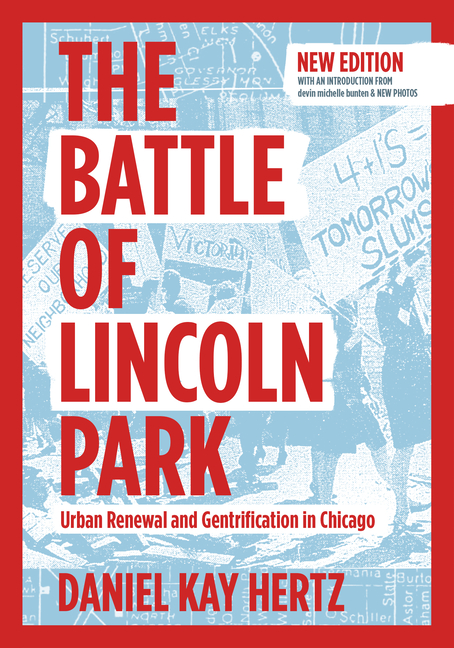
The Battle of Lincoln Park: Urban Renewal and Gentrification in Chicago - Paperback
Choose Option
Paperback

The Battle of Lincoln Park: Urban Renewal and Gentrification in Chicago
Pay over time for orders over $35.00 with
Offers & Perks
Earn 14 points with this purchase
Added to your rewards balance after checkout.
100 points welcome bonus
Create an account and start with extra points.
"A brief, cogent analysis of gentrification in Chicago . . . an incisive and useful narrative on the puzzle of urban development."--Kirkus Reviews
There was a time when Chicago's affluent Lincoln Park was the forefront of a battle for a new kind of urban life. In the years after World War II, a movement began to reverse the middle-class flight to the suburbs. In place of the old, poorly maintained apartments and dense streetscapes of taverns and butchers in the North Side neighborhood, rehabbers imagined a new kind of community--a renovated, modern one that held on to the convenience, diversity, and character of a historic urban quarter but also enjoyed the prosperity and privileges of a new subdivision.
But as the old buildings came down, cheap studios were combined to create ever more spacious, luxurious homes. Property values swiftly rose, and the people who were being evicted to make room for progress began to assert their own ideas about the future of Lincoln Park, with the help of the Young Lords Organization. Over the course of the 1960s, divisions within the community deepened. Letters and picket lines gave way to increasingly violent strikes and counterstrikes as each camp tried to settle the same existential questions that beguile so many cities today: Who is a neighborhood for? And who gets to decide?
This revised edition features striking archival photos, new maps, and a foreword by devin michelle bunten explaining the lasting impact and relevance of the book to Chicagoans, planners, urbanists, and all who are curious about the way cities change.
Daniel Kay Hertz is the director of housing at Impact for Equity. He has written about urban issues for a number of outlets including City Observatory, The Atlantic, Chicago magazine, South Side Weekly, and the Chicago Reader. He earned a BA in government from Harvard University and an MA in public policy from the University of Chicago. He lives in Chicago.
Contributor(s)
Author
Free shipping on orders over $75. Standard shipping takes 3-7 business days. Eligible items may be returned within 30 days of delivery. Conditions apply.