
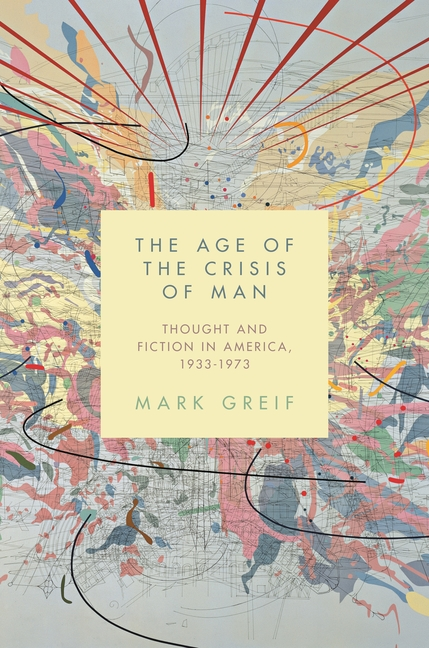
The Age of the Crisis of Man: Thought and Fiction in America, 1933-1973 - Paperback
by Mark Greif
$33.99
$36.00
-6%Quantity
01
Pay over time for orders over $35.00 with
Offers & Perks
Earn 33 points with this purchase
Added to your rewards balance after checkout.
100 points welcome bonus
Create an account and start with extra points.
Availability:In StockContributor:Mark GreifTheme:Aspects (Academic)/Philosophical, Chronological Period/20th CenturyPublish date:11/8/2016Pages:448
Languages:EnglishPublisher:Princeton University PressISBN-13:9780691173290ISBN-10:069117329XUPC:9780691173290Book Category:Literary Criticism, Philosophy, HistoryBook Subcategory:American, United StatesBook Topic:20th CenturySize:8.40 x 5.50 x 1.20 inchesWeight:0.499Product ID:SCJZ4PP8CC
A compelling intellectual and literary history of midcentury America
In a midcentury American cultural episode forgotten today, intellectuals of all schools shared a belief that human nature was under threat. The immediate result was a glut of dense, abstract books on the "nature of man." But the dawning "age of the crisis of man," as Mark Greif calls it, was far more than a historical curiosity. In this ambitious intellectual and literary history, Greif recovers this lost line of thought to show how it influenced society, politics, and culture before, during, and long after World War II. During the 1930s and 1940s, fears of the barbarization of humanity energized New York intellectuals, Chicago protoconservatives, European Jewish émigrés, and native-born bohemians to seek "re-enlightenment," a new philosophical account of human nature and history. After the war this effort diffused, leading to a rebirth of modern human rights and a new power for the literary arts. Critics' predictions of a "death of the novel" challenged writers to invest bloodless questions of human nature with flesh and detail. Hemingway, Faulkner, and Richard Wright wrote flawed novels of abstract man. Succeeding them, Ralph Ellison, Saul Bellow, Flannery O'Connor, and Thomas Pynchon constituted a new guard who tested philosophical questions against social realities--race, religious faith, and the rise of technology--that kept difference and diversity alive. By the 1960s, the idea of "universal man" gave way to moral antihumanism, as new sensibilities and social movements transformed what had come before. Greif's reframing of a foundational debate takes us beyond old antagonisms into a new future, and gives a prehistory to the fractures of our own era.Languages:EnglishPublisher:Princeton University PressISBN-13:9780691173290ISBN-10:069117329XUPC:9780691173290Book Category:Literary Criticism, Philosophy, HistoryBook Subcategory:American, United StatesBook Topic:20th CenturySize:8.40 x 5.50 x 1.20 inchesWeight:0.499Product ID:SCJZ4PP8CC
Mark Greif is associate professor of literary studies at the New School. He is a founder and editor of the journal n+1.
Publisher: Princeton University Press
Contributor(s)
Author
Free shipping on orders over $75. Standard shipping takes 3-7 business days. Eligible items may be returned within 30 days of delivery. Conditions apply.