
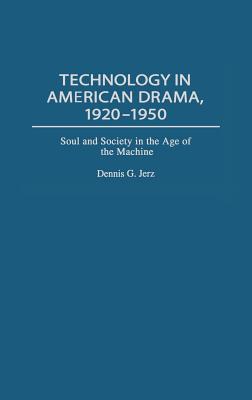
Technology in American Drama, 1920-1950: Soul and Society in the Age of the Machine - Hardcover
Pay over time for orders over $35.00 with
Offers & Perks
Earn 63 points with this purchase
Added to your rewards balance after checkout.
100 points welcome bonus
Create an account and start with extra points.
This study explores the relationship between humans and machines during an age when technology became increasingly domesticated and accepted as an index to the American dream. The marriage between dramatic art and dramatic technology stems from the physical realities of staging and from the intimate connection of technology with human labor inside and outside the household. This book examines how American dramatists of the 1920s drew upon European Expressionism and innovative staging techniques to develop their characters and themes, and how later playwrights, such as Tennessee Williams and Arthur Miller, established the American dramatic canon when technology had become a conventional and integral component of domestic life.
Technology in American Drama, 1920-1950, explores the relationship between humans and machines during an age when technology became increasingly domesticated and accepted as an index to the American dream. The marriage between dramatic art and dramatic technology stems from both the physical realities of staging and the intimate connection of technology with human labor inside and outside the household. Technology shapes and defines the values of the soul, individually and collectively, in addition to producing the external environment in which people live. This book studies how playwrights of the era reflected the changing role of technology in American society. Drawing on the experiments of European Expressionism, American dramatists of the 1920s found new techniques for developing character and theme, along with innovative staging devices, such as the threatening machines in Elmer Rice's The Adding Machine, Sophie Treadwell's Machinal, and Eugene O'Neill's Dynamo. By the time Thornton Wilder, Tennessee Williams, and Arthur Miller established the canon of American drama, technology was no longer an impersonal force to be resisted, but a conventional and integral component of domestic life. In examining these dramatists and their works, this book provides an insightful analysis of a largely neglected topic.Contributor(s)
Author
Free shipping on orders over $75. Standard shipping takes 3-7 business days. Eligible items may be returned within 30 days of delivery. Conditions apply.