
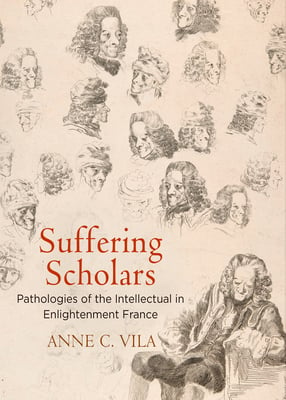
Suffering Scholars: Pathologies of the Intellectual in Enlightenment France - Hardcover
Pay over time for orders over $35.00 with
Offers & Perks
Earn 78 points with this purchase
Added to your rewards balance after checkout.
100 points welcome bonus
Create an account and start with extra points.
As early as Aristotle's Problem XXX, intellectual superiority has been linked to melancholy. The association between sickness and genius continued to be a topic for discussion in the work of early modern writers, most recognizably in Robert Burton's The Anatomy of Melancholy. But it was not until the eighteenth century that the phenomenon known as the "suffering scholar" reached its apotheosis, a phenomenon illustrated by the popularity of works such as Samuel-Auguste Tissot's De la santé des gens de lettres, first published in 1768. Though hardly limited to French-speaking Europe, the link between mental endeavor and physical disorder was embraced with particular vigor there, as was the tendency to imbue intellectuals with an aura of otherness and detachment from the world. Intellectuals and artists were portrayed as peculiarly susceptible to altered states of health as well as psyche--the combination of mental intensity and somatic frailty proved both the privileges and the perils of knowledge-seeking and creative endeavor.
In Suffering Scholars, Anne C. Vila focuses on the medical and literary dimensions of the cult of celebrity that developed around great intellectuals during the French Enlightenment. Beginning with Tissot's work, which launched a subgenre of health advice aimed specifically at scholars, she demonstrates how writers like Voltaire, Diderot, Rousseau, and Mme de Staël, responded to the "suffering scholar" syndrome and helped to shape it. She traces the ways in which this syndrome influenced the cultural perceptions of iconic personae such as the philosophe, the solitary genius, and the learned lady. By showing how crucial the so-called suffering scholar was to debates about the mind-body relation as well as to sex and sensibility, Vila sheds light on the consequences book-learning was thought to have on both the individual body and the body politic, not only in the eighteenth century but also into the decades following the Revolution.Contributor(s)
Author
Free shipping on orders over $75. Standard shipping takes 3-7 business days. Eligible items may be returned within 30 days of delivery. Conditions apply.