
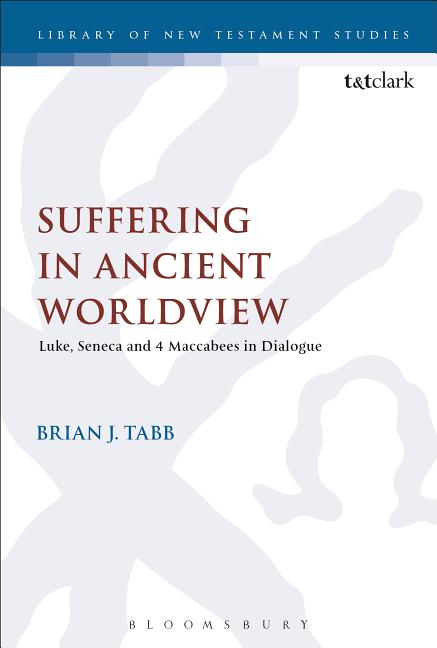
Suffering in Ancient Worldview: Luke, Seneca and 4 Maccabees in Dialogue - Paperback
$53.99
Quantity
01
Pay over time for orders over $35.00 with
Offers & Perks
Earn 53 points with this purchase
Added to your rewards balance after checkout.
100 points welcome bonus
Create an account and start with extra points.
Availability:In StockContributor:Brian J. TabbSeries:Library of New Testament StudiesTheme:Religious Orientation/ChristianPublish date:11/1/2018Pages:256
Languages:EnglishPublisher:Bloomsbury Publishing PLCISBN-13:9780567684868ISBN-10:0567684865UPC:9780567684868Book Category:Religion, PhilosophyBook Subcategory:Biblical Studies, MovementsBook Topic:New Testament, HumanismSize:9.21 x 6.14 x 0.62 inchesWeight:0.418Product ID:SCRT3ZFKTR
Suffering in Ancient Worldview investigates representative Christian, Roman Stoic and Jewish perspectives on the nature, problem and purpose of suffering. Tabb presents a close reading of Acts, Seneca's essays and letters and 4 Maccabees, highlighting how each author understands suffering vis-Á -vis God, humanity, the world's problem and its solution, and the future. Tabb's study offers a pivotal definition for suffering in the 1st century and concludes by creatively situating these ancient authors in dialogue with each other.
Tabb shows that, despite their different religious and cultural positions, these ancient authors each expect and accept suffering as a present reality that is governed by divine providence, however defined. Luke, Seneca and the author of 4 Maccabees each affirm that suffering is not humanity's fundamental problem. Rather, suffering functions as a cipher for other things to be displayed. For Seneca, suffering provides an opportunity for one to learn and show virtue. The author of 4 Maccabees presents the nation's suffering as retribution for sin, while the martyrs' virtuous suffering leads to Israel's salvation. For Luke, the Lord Jesus suffers to accomplish salvation and restoration for the world marred by sin and suffering, and the suffering of his followers is instrumental for Christian mission.
Tabb shows that, despite their different religious and cultural positions, these ancient authors each expect and accept suffering as a present reality that is governed by divine providence, however defined. Luke, Seneca and the author of 4 Maccabees each affirm that suffering is not humanity's fundamental problem. Rather, suffering functions as a cipher for other things to be displayed. For Seneca, suffering provides an opportunity for one to learn and show virtue. The author of 4 Maccabees presents the nation's suffering as retribution for sin, while the martyrs' virtuous suffering leads to Israel's salvation. For Luke, the Lord Jesus suffers to accomplish salvation and restoration for the world marred by sin and suffering, and the suffering of his followers is instrumental for Christian mission.
Languages:EnglishPublisher:Bloomsbury Publishing PLCISBN-13:9780567684868ISBN-10:0567684865UPC:9780567684868Book Category:Religion, PhilosophyBook Subcategory:Biblical Studies, MovementsBook Topic:New Testament, HumanismSize:9.21 x 6.14 x 0.62 inchesWeight:0.418Product ID:SCRT3ZFKTR
Brian J. Tabb is Academic Dean and Assistant Professor of Biblical Studies at Bethlehem College and Seminary in Minneapolis, USA.
Publisher: Bloomsbury Publishing PLC
Contributor(s)
Author
Free shipping on orders over $75. Standard shipping takes 3-7 business days. Eligible items may be returned within 30 days of delivery. Conditions apply.