
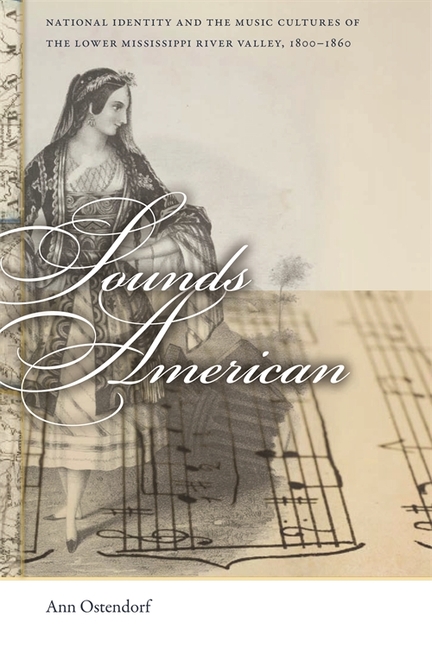
Sounds American: National Identity and the Music Cultures of the Lower Mississippi River Valley, 1800-1860
$36.99
Quantity
01
Pay over time for orders over $35.00 with
Offers & Perks
Earn 36 points with this purchase
Added to your rewards balance after checkout.
100 points welcome bonus
Create an account and start with extra points.
Availability:In StockContributor:Ann OstendorfSeries:Early American PlacesTheme:Aspects (Academic)/Sociological, Chronological Period/19th CenturyPublish date:9/15/2011Pages:272
Languages:EnglishPublisher:University of Georgia PressISBN-13:9780820339764ISBN-10:0820339768UPC:9780820339764Book Category:Music, Social Science, HistoryBook Subcategory:History & Criticism, Cultural & Ethnic Studies, United StatesBook Topic:19th CenturySize:9.00 x 6.00 x 0.68 inchesWeight:0.336Product ID:SCRB810CCG
Sounds American provides new perspectives on the relationship between nationalism and cultural production by examining how Americans grappled with musical diversity in the early national and antebellum eras.
During this period a resounding call to create a distinctively American music culture emerged as a way to bind together the varied, changing, and uncertain components of the new nation. This played out with particular intensity in the lower Mississippi River valley, and New Orleans especially. Ann Ostendorf argues that this region, often considered an exception to the nation--with its distance from the center of power, its non-British colonial past, and its varied population--actually shared characteristics of many other places eventually incorporated into the country, thus making it a useful case study for the creation of American culture. Ostendorf conjures the territory's phenomenally diverse "music ways" including grand operas and balls, performances by church choirs and militia bands, and itinerant violin instructors. Music was often associated with "foreigners," in particular Germans, French, Irish, and Africans. For these outsiders, music helped preserve collective identity. But for critics concerned with developing a national culture, this multitude of influences presented a dilemma that led to an obsessive categorization of music with racial, ethnic, or national markers. Ultimately, the shared experience of categorizing difference and consuming this music became a unifying national phenomenon. Experiencing the unknown became a shared part of the American experience.Languages:EnglishPublisher:University of Georgia PressISBN-13:9780820339764ISBN-10:0820339768UPC:9780820339764Book Category:Music, Social Science, HistoryBook Subcategory:History & Criticism, Cultural & Ethnic Studies, United StatesBook Topic:19th CenturySize:9.00 x 6.00 x 0.68 inchesWeight:0.336Product ID:SCRB810CCG
Ann Ostendorf is an assistant professor of history at Gonzaga University.
Publisher: University of Georgia Press
Contributor(s)
Author
Free shipping on orders over $75. Standard shipping takes 3-7 business days. Eligible items may be returned within 30 days of delivery. Conditions apply.