
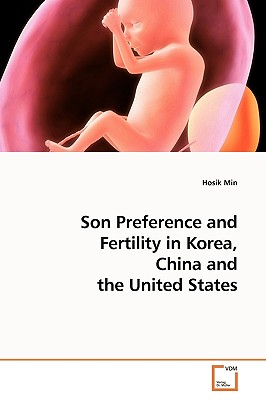
Son Preference and Fertility in Korea, China and the United States - Paperback
by Hosik Min
$48.99
$52.92
-7%Quantity
01
Pay over time for orders over $35.00 with
Offers & Perks
Earn 48 points with this purchase
Added to your rewards balance after checkout.
100 points welcome bonus
Create an account and start with extra points.
Languages:EnglishPublisher:VDM VerlagISBN-13:9783639176407ISBN-10:3639176405UPC:9783639176407Book Category:Social ScienceBook Subcategory:DemographySize:9.00 x 6.00 x 0.30 inchesWeight:0.2Product ID:SCXNER4DEZ
The goal of this work is to examine the impact of son preference on fertility in China and South Korea compared with the U.S. The impact that a female birth has on the likelihood of a woman having another birth is of the most concern: Women who have one or two daughter(s) as previous child(ren) are expected to be more likely to experience the hazard of having a second or a third birth. The results showed that women in China and South Korea who had a daughter instead of a son as their first child had a higher hazard of having a second birth as expected. Moreover, the results showed that the hazard ratio of having a third birth for Chinese and South Korean women was almost four and five times more, respectively. As expected, the hazard ratios for the U.S. were notsignificant. The more educated women who had a daughter(s) instead of a son(s) as their previous child(ren) were less likely to have a second birth, but not in the third birth. This means women's education apparently does not reduce son preference in the case of the third birth. Thus, women's education apparently has limitedor no influence on the childbearing decision where son preference is strong.
Languages:EnglishPublisher:VDM VerlagISBN-13:9783639176407ISBN-10:3639176405UPC:9783639176407Book Category:Social ScienceBook Subcategory:DemographySize:9.00 x 6.00 x 0.30 inchesWeight:0.2Product ID:SCXNER4DEZ
Free shipping on orders over $75. Standard shipping takes 3-7 business days. Eligible items may be returned within 30 days of delivery. Conditions apply.