
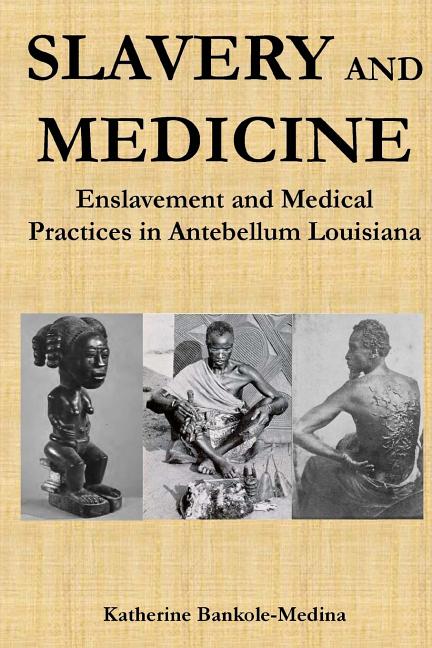
Slavery and Medicine: Enslavement and Medical Practices in Antebellum Louisiana - Paperback
$30.99
$35.00
-11%Quantity
01
Pay over time for orders over $35.00 with
Offers & Perks
Earn 30 points with this purchase
Added to your rewards balance after checkout.
100 points welcome bonus
Create an account and start with extra points.
Availability:In StockContributor:Katherine Bankole-Medina Ph. D.Theme:Ethnic Orientation/African American, Topical/Black HistoryPublish date:5/18/2017Pages:350
Languages:EnglishPublisher:Liberated Scholars PressISBN-13:9780692895290ISBN-10:0692895299UPC:9780692895290Book Category:History, MedicalBook Subcategory:African American & Black, HistorySize:9.02 x 5.98 x 0.73 inchesWeight:0.468Product ID:SCS411QWW0
Enslavement and medicine historiography has not addressed the African's proactive participation in, and development of, medicine in the United States. The scholarly literature largely focuses on "Negro/Slave Medicine" and the efforts of slaveowners to acquire adequate care for the enslaved African. Enslavement and medicine scholars have contended that Africans were incapable of fostering a medical universe that was reflective of their indigenous African culture and different from the European medical legacy left to Whites. This research Afrocentrically addresses the African's proactive management of medical care; and the neglect of scholars to include brutality and punishment, and its arbitrary nature, in the enslaved African's constant need for medical attention. In addition, slave labor (particularly that involving agriculture) was found to be an important medical health risk factor, including two overlooked labor tasks of enslaved African women-breeding and concubinage. Enslaved Africans in the southeastern parishes of antebellum Louisiana retained a significant Africanism in their medical universe which was the sustained pursuit of holistic healing. Enslaved Africans operated as agents of their own medical care, and not always as dependent recipients of care from slaveowners as the literature suggests. Africans participated as diviners and dispensers of medical care (in the Babalawo and Onishegun sense, representative of the West African Yoruba tradition). However, antebellum observers and contemporary scholars have characterized the African materia medica in the institution of enslavement in the United States as "superstitious" legacies from the continent of Africa. Due to many external factors, and because of their enslavement status, Africans had a higher medical health risk (mortality and morbidity) than other members of antebellum society. Through the necessity to respond immediately to medical care issues, enslaved Africans in the diaspora demonstrated the persistence of the traditional African worldview regarding holistic well-being.
Languages:EnglishPublisher:Liberated Scholars PressISBN-13:9780692895290ISBN-10:0692895299UPC:9780692895290Book Category:History, MedicalBook Subcategory:African American & Black, HistorySize:9.02 x 5.98 x 0.73 inchesWeight:0.468Product ID:SCS411QWW0
Katherine Bankole-Medina, Ph.D., is a Professor of History and Distinguished Faculty Researcher at Coppin State University in Baltimore, Maryland.
Publisher: Liberated Scholars Press
Contributor(s)
Free shipping on orders over $75. Standard shipping takes 3-7 business days. Returns accepted within 30 days of purchase.