
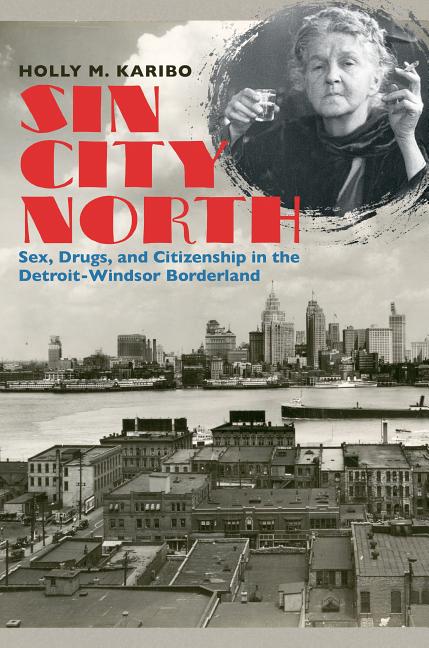
Sin City North: Sex, Drugs, and Citizenship in the Detroit-Windsor Borderland - Paperback
$40.99
Quantity
01
Pay over time for orders over $35.00 with
Offers & Perks
Earn 40 points with this purchase
Added to your rewards balance after checkout.
100 points welcome bonus
Create an account and start with extra points.
Availability:In StockContributor:Holly M. KariboSeries:The David J. Weber the New Borderlands HistoryTheme:Chronological Period/20th Century, Cultural Region/Canadian, Cultural Region/Great Lakes, Cultural Region/Midwest, Demographic Orientation/Urban, Geographic Orientation/Michigan, Geographic Orientation/Ontario, Locality/Detroit, Michigan, Locality/Windsor, OntarioPublish date:10/26/2015Pages:226
Languages:EnglishPublisher:University of North Carolina PressISBN-13:9781469625201ISBN-10:1469625202UPC:9781469625201Book Category:HistoryBook Subcategory:United States, Canada, Social HistoryBook Topic:20th Century, Post-Confederation (1867-)Size:9.27 x 6.20 x 0.68 inchesWeight:0.35Product ID:SCZJ02NWVP
The early decades of the twentieth century sparked the Detroit-Windsor region's ascendancy as the busiest crossing point between Canada and the United States, setting the stage for socioeconomic developments that would link the border cities for years to come. As Holly M. Karibo shows, this border fostered the emergence of illegal industries alongside legal trade, rapid industrial development, and tourism. Tracing the growth of the two cities' cross-border prostitution and heroin markets in the late 1940s and the 1950s, Sin City North explores the social, legal, and national boundaries that emerged there and their ramifications.
In bars, brothels, and dance halls, Canadians and Americans were united in their desire to cross racial, sexual, and legal lines in the border cities. Yet the increasing visibility of illicit economies on city streets--and the growing number of African American and French Canadian women working in illegal trades--provoked the ire of moral reformers who mobilized to eliminate them from their communities. This valuable study demonstrates that struggles over the meaning of vice evolved beyond definitions of legality; they were also crucial avenues for residents attempting to define productive citizenship and community in this postwar urban borderland.
In bars, brothels, and dance halls, Canadians and Americans were united in their desire to cross racial, sexual, and legal lines in the border cities. Yet the increasing visibility of illicit economies on city streets--and the growing number of African American and French Canadian women working in illegal trades--provoked the ire of moral reformers who mobilized to eliminate them from their communities. This valuable study demonstrates that struggles over the meaning of vice evolved beyond definitions of legality; they were also crucial avenues for residents attempting to define productive citizenship and community in this postwar urban borderland.
Languages:EnglishPublisher:University of North Carolina PressISBN-13:9781469625201ISBN-10:1469625202UPC:9781469625201Book Category:HistoryBook Subcategory:United States, Canada, Social HistoryBook Topic:20th Century, Post-Confederation (1867-)Size:9.27 x 6.20 x 0.68 inchesWeight:0.35Product ID:SCZJ02NWVP
Karibo, Holly M.: - Holly M. Karibo is assistant professor of history at Oklahoma State University.
Publisher: University of North Carolina Press
Contributor(s)
Author
Free shipping on orders over $75. Standard shipping takes 3-7 business days. Eligible items may be returned within 30 days of delivery. Conditions apply.