
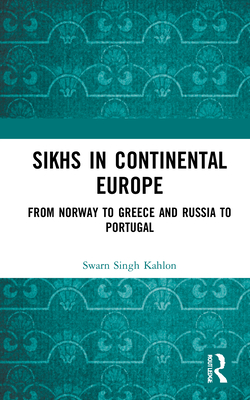
Sikhs in Continental Europe: From Norway to Greece and Russia to Portugal - Hardcover
Pay over time for orders over $35.00 with
Offers & Perks
Earn 231 points with this purchase
Added to your rewards balance after checkout.
100 points welcome bonus
Create an account and start with extra points.
This book is the third in the trilogy of books looking at the comparatively less-known destinations of Sikh migration to non-English speaking countries. The first one was Sikhs in Latin America, followed by Sikhs in Asia Pacific.
Earlier Sikh migration was focused on the British Commonwealth and the USA. Once restrictions were placed on entering the UK, the Sikhs were forced to explore the possibility of migrating to other countries including Continental Europe. The pace of migration picked up in 1970s. Later there were more asylum seekers in the 1980s and 1990s adding to the migration numbers. Some could enter Europe through legal channels, while others found alternative routes as undocumented migrants. Sikhs found employment mostly as unskilled labour but now they have been able to create niche professions such as dairying in Italy and restaurants/bars in Finland.
There is now a large second generation who is fully qualified to enter other professions. The author describes how Sikhs have kept up their traditions through 'Nagar Kirtans', Turban, Youth Summer camps, and 'sewa'. There are almost 140 gurdwaras in Europe with a meagre population of less than a quarter million.This book is the third in the trilogy of books looking at the comparatively less-known destinations of Sikh migration to non-English speaking countries. The first one was Sikhs in Latin America, followed by Sikhs in Asia Pacific.
Earlier Sikh migration was focused on the British Commonwealth and the USA. Once restrictions were placed on entering the UK, the Sikhs were forced to explore the possibility of migrating to other countries including Continental Europe. The pace of migration picked up in 1970s. Later there were more asylum seekers in the 1980s and 1990s adding to the migration numbers. Some could enter Europe through legal channels, while others found alternative routes as undocumented migrants. Sikhs found employment mostly as unskilled labour but now they have been able to create niche professions such as dairying in Italy and restaurants/bars in Finland.
There is now a large second generation who is fully qualified to enter other professions. The author describes how Sikhs have kept up their traditions through 'Nagar Kirtans', Turban, Youth Summer camps, and 'sewa'. There are almost 140 gurdwaras in Europe with a meagre population of less than a quarter million.
Please note: Taylor & Francis does not sell or distribute the Hardback in India, Pakistan, Nepal, Bhutan, Bangladesh and Sri Lanka.
Swarn Singh Kahlon (www.sikhglobalvillage.com) has returned to Chandigarh after almost forty-five years, first studying Engineering in Bihar and the USA and then working in the USA, Austria, Mumbai and Kolkata. His career of thirty years with Imperial Chemical Industries involved extensive travel overseas. Over the last decade, he has been travelling extensively in an effort to complete the global migration map of Sikhs.
Contributor(s)
Author
Free shipping on orders over $75. Standard shipping takes 3-7 business days. Eligible items may be returned within 30 days of delivery. Conditions apply.