
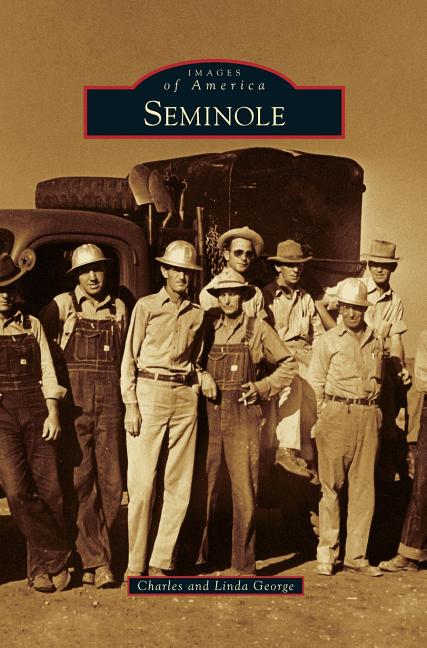
Seminole - Hardcover
$23.99
$31.99
-25%Quantity
01
Pay over time for orders over $35.00 with
Offers & Perks
Earn 23 points with this purchase
Added to your rewards balance after checkout.
100 points welcome bonus
Create an account and start with extra points.
Availability:In StockContributor:Charles George, Linda GeorgeTheme:Cultural Region/Mid-South, Cultural Region/South, Cultural Region/Southwest U.S., Geographic Orientation/TexasPublish date:2/27/2012Pages:130
Languages:EnglishPublisher:Arcadia Publishing Library EditionsISBN-13:9781531657079ISBN-10:1531657079UPC:9781531657079Book Category:HistoryBook Subcategory:United StatesBook Topic:State & LocalSize:9.61 x 6.69 x 0.38 inchesWeight:0.413Product ID:SCG8Y55QZ1
Seminole got its name from former slaves who escaped Southern
plantations in the early 1800s and fled to the swamps of Florida.
They lived alongside Seminole Indians and later came to be known
as Black Seminoles. Renowned for excellent tracking abilities, they
eventually served as guides for the Shafter expedition to West Texas
in the mid-1870s, which opened the region. In a shallow draw on
the prairie, the Black Seminoles discovered water wells dug by the
Comanche. The "Seminole Wells" demonstrated the area's livability.
Settlers arrived a few decades later, and by 1905, Gaines County and
its county seat were established. This small town became Seminole.
Ranching was the area's first industry, but it was eclipsed in the 1920s
with the discovery of oil. Today, Seminole is a thriving multicultural
farming and oil-producing center with excellent schools, a booming
economy, and the friendliest people around.
plantations in the early 1800s and fled to the swamps of Florida.
They lived alongside Seminole Indians and later came to be known
as Black Seminoles. Renowned for excellent tracking abilities, they
eventually served as guides for the Shafter expedition to West Texas
in the mid-1870s, which opened the region. In a shallow draw on
the prairie, the Black Seminoles discovered water wells dug by the
Comanche. The "Seminole Wells" demonstrated the area's livability.
Settlers arrived a few decades later, and by 1905, Gaines County and
its county seat were established. This small town became Seminole.
Ranching was the area's first industry, but it was eclipsed in the 1920s
with the discovery of oil. Today, Seminole is a thriving multicultural
farming and oil-producing center with excellent schools, a booming
economy, and the friendliest people around.
Languages:EnglishPublisher:Arcadia Publishing Library EditionsISBN-13:9781531657079ISBN-10:1531657079UPC:9781531657079Book Category:HistoryBook Subcategory:United StatesBook Topic:State & LocalSize:9.61 x 6.69 x 0.38 inchesWeight:0.413Product ID:SCG8Y55QZ1
Publisher: Arcadia Publishing Library Editions
Contributor(s)
Authors
Free shipping on orders over $75. Standard shipping takes 3-7 business days. Returns accepted within 30 days of purchase.