Surprise Castle
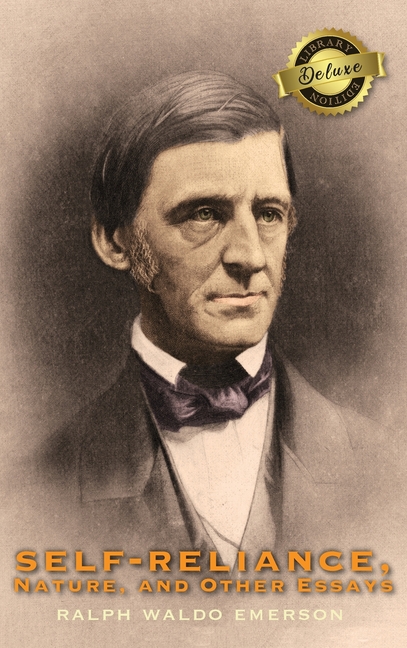
Self-Reliance, Nature, and Other Essays (Deluxe Library Edition)

Self-Reliance, Nature, and Other Essays (Deluxe Library Edition) - Hardcover

$27.99
$29.95
-7%
Quantity
01

Pay over time for orders over $35.00 with

Offers & Perks

Earn 27 points with this purchase

Added to your rewards balance after checkout.

100 points welcome bonus

Create an account and start with extra points.

Join now
Availability:In StockContributor:Ralph Waldo EmersonPublish date:12/29/2020Pages:120
Languages:EnglishPublisher:Engage ClassicsISBN-13:9781774760567ISBN-10:1774760568UPC:9781774760567Book Category:Philosophy, Self-Help, LawBook Subcategory:Free Will & Determinism, Personal Growth, EssaysBook Topic:HappinessSize:9.00 x 6.00 x 0.44 inchesWeight:0.35Product ID:SC6KW4M4GZ

Self-Reliance is an 1841 essay written by American transcendentalist philosopher and essayist Ralph Waldo Emerson. It describes the need for each individual to avoid conformity and false consistency, and follow his own instincts and ideas. Also included are the essays The Over Soul, Circles, The Poet, Experience, Nature, and Friendship.

Emerson helped start the beginning of the Transcendentalist movement in America. The Transcendentalist movement flourished in New England, and proposed a revolutionarily new philosophy of life. This new philosophy drew upon old ideas of Romanticism, Unitarianism, and German Idealism. Some of these ideas pertained closely to the values of America at the time. These values included nature, individualism, and reform, and can be noted in Emerson's essays.

Languages:EnglishPublisher:Engage ClassicsISBN-13:9781774760567ISBN-10:1774760568UPC:9781774760567Book Category:Philosophy, Self-Help, LawBook Subcategory:Free Will & Determinism, Personal Growth, EssaysBook Topic:HappinessSize:9.00 x 6.00 x 0.44 inchesWeight:0.35Product ID:SC6KW4M4GZ
Emerson, Ralph Waldo: - "Ralph Waldo Emerson (May 25, 1803 - April 27, 1882) was an American essayist, lecturer, philosopher, and poet who led the transcendentalist movement of the mid-19th century. He was seen as a champion of individualism and a prescient critic of the countervailing pressures of society, and he disseminated his thoughts through dozens of published essays and more than 1,500 public lectures across the United States. Emerson gradually moved away from the religious and social beliefs of his contemporaries, formulating and expressing the philosophy of transcendentalism in his 1836 essay "Nature." His first two collections of essays, Essays represent the core of his thinking. They include the well-known essays "Self-Reliance," "The Over-Soul," "Circles," "The Poet," and "Experience." Together with "Nature," these essays made the decade from the mid-1830s to the mid-1840s Emerson's most fertile period. Emerson wrote on a number of subjects, never espousing fixed philosophical tenets, but developing certain ideas such as individuality, freedom, the ability for mankind to realize almost anything, and the relationship between the soul and the surrounding world. Emerson is one of several figures who took a more pantheist or pandeist approach by rejecting views of God as separate from the world. He remains among the linchpins of the American romantic movement, and his work has greatly influenced the thinkers, writers and poets that followed him. "In all my lectures," he wrote, "I have taught one doctrine, namely, the infinitude of the private man." Emerson is also well known as a mentor and friend of Henry David Thoreau, a fellow transcendentalist."
Publisher: Engage Classics

Free shipping on orders over $75. Standard shipping takes 3-7 business days. Eligible items may be returned within 30 days of delivery. Conditions apply.