
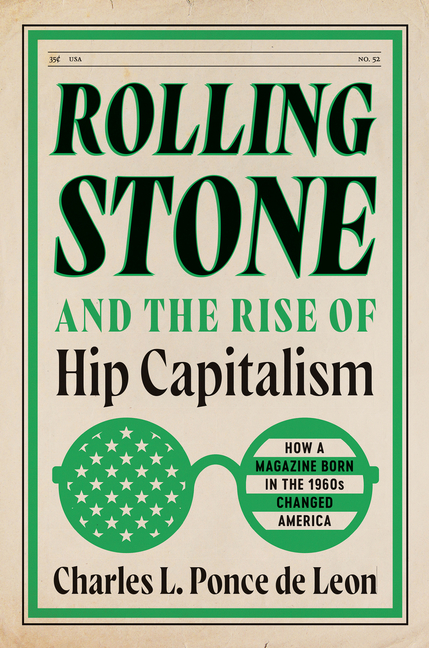
Rolling Stone and the Rise of Hip Capitalism: How a Magazine Born in the 1960s Changed America
$21.99
$30.00
-27%Quantity
01
Pay over time for orders over $35.00 with
Offers & Perks
Earn 21 points with this purchase
Added to your rewards balance after checkout.
100 points welcome bonus
Create an account and start with extra points.
Availability:In StockContributor:Charles L. Ponce de LeonTheme:Chronological Period/20th CenturyPublish date:4/28/2026Pages:304
Languages:EnglishPublisher:University of North Carolina PressISBN-13:9781469694399ISBN-10:1469694395UPC:9781469694399Book Category:History, Social Science, MusicBook Subcategory:United States, Cultural & Ethnic Studies, EthnomusicologyBook Topic:20th Century, American StudiesSize:9.36 x 6.48 x 1.03 inchesWeight:0.595Product ID:SCHTVC0BPG
In its early years, Rolling Stone stood out on the magazine rack: an iconoclastic bimonthly aimed at young Americans, dedicated to music, culture, and politics. Magazine cofounder Jann Wenner's vision of a magazine that blended politics with sophisticated coverage of rock music and related social and cultural trends was groundbreaking and a surprising commercial success, turning the brash young publisher into the era's quintessential "hip capitalist."
This is a history of Rolling Stone's heyday, from its founding in 1967 to its twentieth anniversary, examining its coverage of notable social, cultural, and political developments and the contributions of its distinguished and often brilliant writers--from Greil Marcus and Hunter S. Thompson to William Greider and P. J. O'Rourke. It also reveals how, in response to shifts in its audience, the magazine industry, and the broader culture, Rolling Stone gradually changed, becoming more successful but also less innovative and influential. In the magazine's prime, however, Wenner and company showed how a thoughtful, irreverent magazine could attract advertisers as well as readers and spread sixties-inspired values into the mainstream.
This is a history of Rolling Stone's heyday, from its founding in 1967 to its twentieth anniversary, examining its coverage of notable social, cultural, and political developments and the contributions of its distinguished and often brilliant writers--from Greil Marcus and Hunter S. Thompson to William Greider and P. J. O'Rourke. It also reveals how, in response to shifts in its audience, the magazine industry, and the broader culture, Rolling Stone gradually changed, becoming more successful but also less innovative and influential. In the magazine's prime, however, Wenner and company showed how a thoughtful, irreverent magazine could attract advertisers as well as readers and spread sixties-inspired values into the mainstream.
Languages:EnglishPublisher:University of North Carolina PressISBN-13:9781469694399ISBN-10:1469694395UPC:9781469694399Book Category:History, Social Science, MusicBook Subcategory:United States, Cultural & Ethnic Studies, EthnomusicologyBook Topic:20th Century, American StudiesSize:9.36 x 6.48 x 1.03 inchesWeight:0.595Product ID:SCHTVC0BPG
Charles L. Ponce de Leon is the author of several books, including Fortunate Son: The Life of Elvis Presley and That's the Way It Is: A History of Television News in America.
Publisher: University of North Carolina Press
Contributor(s)
Author
Free shipping on orders over $75. Standard shipping takes 3-7 business days. Eligible items may be returned within 30 days of delivery. Conditions apply.