
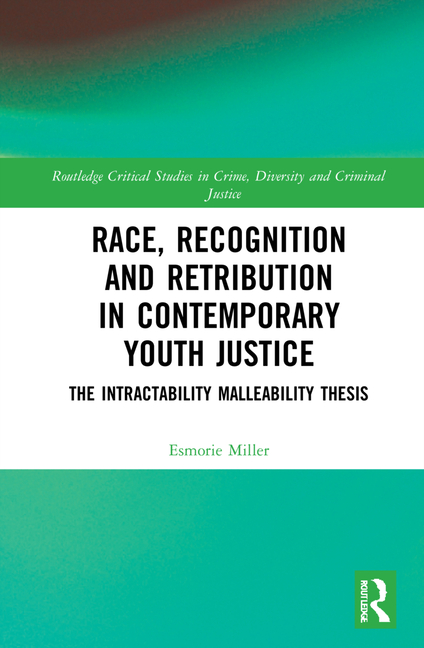
Race, Recognition and Retribution in Contemporary Youth Justice: The Intractability Malleability Thesis - Hardcover
Pay over time for orders over $35.00 with
Offers & Perks
Earn 231 points with this purchase
Added to your rewards balance after checkout.
100 points welcome bonus
Create an account and start with extra points.
Race, Recognition and Retribution in Contemporary Youth Justice provides a socio-historical investigation of the legacy of racial discrimination which informs contemporary youth justice practice in Canada and UK. The book links racial disparities in youth justice, exclusion from ideologies of care and notions of future citizenship.
Esmorie Miller's research historicizes the role of race, racism, and racialization in contemporary youth justice (YJ). Where race in contemporary youth justice is concerned, specifically with the amplification of punishment, her research explores realities beyond crime and punishment; it explores punitive outcomes apparent in contemporary YJ, for racialized youth, as continuities of the historic exclusion of racialized peoples from the benefits of modern, universal rights. Retributive justice has, thus far, decoupled racialized youth's contemporary concerns from this relevant history. A contemporary example of this is the institutional policies and practices around urban youth gangs, in England and Canada. Her research observes that, in both these contexts, race remains invisible in historic narratives on early modern youth penal reform, and thereby in the statutory approaches to gangs. Yet, race is an important part of these histories. Esmorie Miller is a lecturer in Criminology at London South Bank University.
Contributor(s)
Author
Free shipping on orders over $75. Standard shipping takes 3-7 business days. Eligible items may be returned within 30 days of delivery. Conditions apply.