
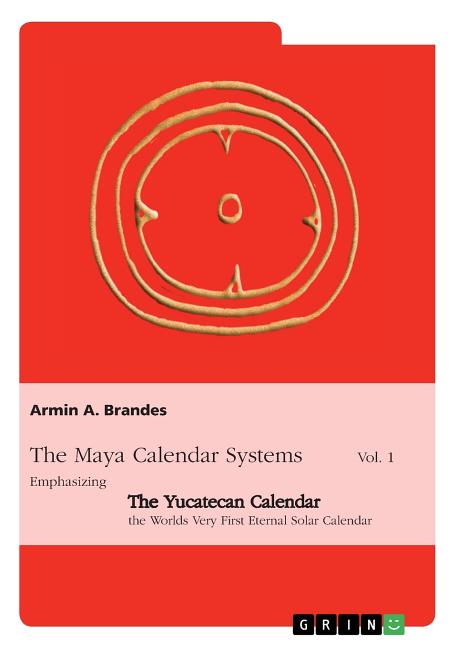
Puuc-Style Data and the Yucatecan Calendar as well as a New Correlation of the Maya Calendars with the Gregorian - Paperback
$48.99
$56.50
-13%Quantity
01
Pay over time for orders over $35.00 with
Offers & Perks
Earn 48 points with this purchase
Added to your rewards balance after checkout.
100 points welcome bonus
Create an account and start with extra points.
Languages:EnglishPublisher:Grin VerlagISBN-13:9783668278950ISBN-10:3668278954UPC:9783668278950Book Category:Social ScienceBook Subcategory:Cultural & Ethnic Studies, AnthropologyBook Topic:Cultural & SocialSize:8.27 x 5.83 x 0.37 inchesWeight:0.218Product ID:SC46F4X16C
Scientific Study from the year 2025 in the subject Ethnology / Cultural Anthropology, language: English, abstract: Many Mayanists challenge Diego de Landa's statement that the Maya had an extra day at the end of every 4th year. Puuc style data lead to the Yucatecan Calendar with corrections of the second and third order to the vague solar calendar year, this by switching patronages after two Calendar Rounds and by a jump over a patronage after four Double Calendar Rounds. Each Calendar Round was counted by 52 vague years, while the corrections, the intercalary days, were lived and administered by the ritual calendar in hiding, in the back-ground. For an eternal solar calendar year the first correction every 4th year is requested and had been provided, it seems, as stated by D. de Landa. The patronages from the start of the reform to the conquest were kaban, ben, muluk, chikchan, (kib was skipped), eb, lamat, kan. In order to distinguish the two Calendar Rounds of a pair the first was counted by current time as ordinal numbers and the second by elapsed time as cardinal numbers. The calendar reform was completed by two switches in the long time count: at first by the one of the elapsed time, undercount Long Count to the current time, overcount Short Count, and later by the one from 20 tun to 24 haab, making the calendar only dependent on the cycle of the sun. With this step the calendar priests of the Rio Bec, Chenes and Puuc region implemented the very first eternal solar calendar by 1140, about 450 years earlier then the one by Pope Gregory XIII. For the Yucatecan Calendar exist two nodal points of early colonial time: the year Ah Pula died, and the year Merida was founded. Based upon these dates a new correla-tion for the Yucatecan and all Maya Calendars and the Christian is given as far as the years are concerned. For the days in the year D. de Landa's other statement of the calendar is applied: the Maya started the year on July 16th of the Julian Calendar. T
Languages:EnglishPublisher:Grin VerlagISBN-13:9783668278950ISBN-10:3668278954UPC:9783668278950Book Category:Social ScienceBook Subcategory:Cultural & Ethnic Studies, AnthropologyBook Topic:Cultural & SocialSize:8.27 x 5.83 x 0.37 inchesWeight:0.218Product ID:SC46F4X16C
Free shipping on orders over $75. Standard shipping takes 3-7 business days. Eligible items may be returned within 30 days of delivery. Conditions apply.