
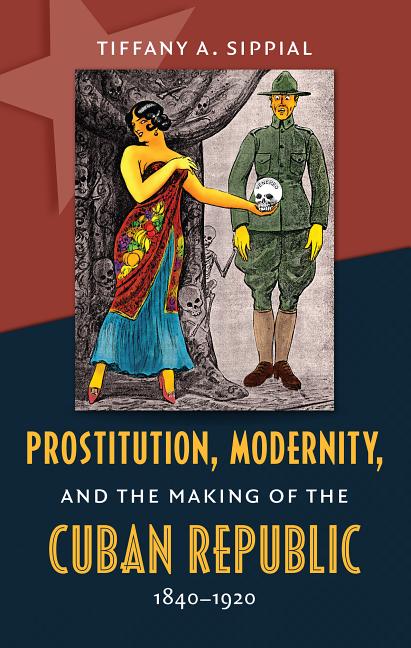
Prostitution, Modernity, and the Making of the Cuban Republic, 1840-1920 - Paperback
$40.99
Quantity
01
Pay over time for orders over $35.00 with
Offers & Perks
Earn 40 points with this purchase
Added to your rewards balance after checkout.
100 points welcome bonus
Create an account and start with extra points.
Availability:In StockContributor:Tiffany A. SippialSeries:Envisioning CubaTheme:Sex & Gender/FemininePublish date:11/11/2013Pages:256
Languages:EnglishPublisher:University of North Carolina PressISBN-13:9781469608945ISBN-10:1469608944UPC:9781469608945Book Category:Social Science, History, PsychologyBook Subcategory:Women's Studies, Caribbean & West Indies, Human SexualityBook Topic:CubaSize:9.20 x 6.00 x 0.60 inchesWeight:0.386Product ID:SC9BH921DQ
Between 1840 and 1920, Cuba abolished slavery, fought two wars of independence, and was occupied by the United States before finally becoming an independent republic. Tiffany A. Sippial argues that during this tumultuous era, Cuba's struggle to define itself as a modern nation found focus in the social and sexual anxieties surrounding prostitution and its regulation.
Sippial shows how prostitution became a prism through which Cuba's hopes and fears were refracted. Widespread debate about prostitution created a forum in which issues of public morality, urbanity, modernity, and national identity were discussed with consequences not only for the capital city of Havana but also for the entire Cuban nation.
Republican social reformers ultimately recast Cuban prostitutes -- and the island as a whole -- as victims of colonial exploitation who could be saved only by a government committed to progressive reforms in line with other modernizing nations of the world. By 1913, Cuba had abolished the official regulation of prostitution, embracing a public health program that targeted the entire population, not just prostitutes. Sippial thus demonstrates the central role the debate about prostitution played in defining republican ideals in independent Cuba.
Sippial shows how prostitution became a prism through which Cuba's hopes and fears were refracted. Widespread debate about prostitution created a forum in which issues of public morality, urbanity, modernity, and national identity were discussed with consequences not only for the capital city of Havana but also for the entire Cuban nation.
Republican social reformers ultimately recast Cuban prostitutes -- and the island as a whole -- as victims of colonial exploitation who could be saved only by a government committed to progressive reforms in line with other modernizing nations of the world. By 1913, Cuba had abolished the official regulation of prostitution, embracing a public health program that targeted the entire population, not just prostitutes. Sippial thus demonstrates the central role the debate about prostitution played in defining republican ideals in independent Cuba.
Languages:EnglishPublisher:University of North Carolina PressISBN-13:9781469608945ISBN-10:1469608944UPC:9781469608945Book Category:Social Science, History, PsychologyBook Subcategory:Women's Studies, Caribbean & West Indies, Human SexualityBook Topic:CubaSize:9.20 x 6.00 x 0.60 inchesWeight:0.386Product ID:SC9BH921DQ
Tiffany A. Sippial is associate professor of history at Auburn University.
Publisher: University of North Carolina Press
Contributor(s)
Author
Free shipping on orders over $75. Standard shipping takes 3-7 business days. Eligible items may be returned within 30 days of delivery. Conditions apply.