
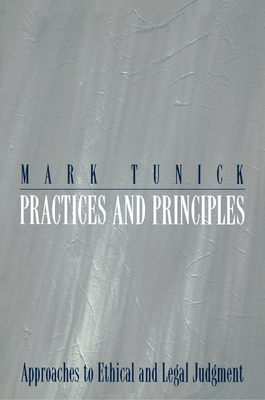
Practices and Principles: Approaches to Ethical and Legal Judgment - Paperback
Pay over time for orders over $35.00 with
Offers & Perks
Earn 63 points with this purchase
Added to your rewards balance after checkout.
100 points welcome bonus
Create an account and start with extra points.
A Japanese woman living in California attempts parent-child suicide, an ancient Japanese custom called "oyako-shinju," in order to rid herself of shame upon learning that her husband has a mistress. She survives, but her two children are drowned in the attempt. Since her attempt was made in accordance with the standards of Japanese culture, should she be tried by the standards and laws of the United States? Are there universally valid moral principles that dictate what is right? Or are moral judgments culturally relative, ultimately dictated by conventions and practices that vary among societies? In Practices and Principles, Mark Tunick takes up the debate between universalists and relativists, and, in political philosophy, between communitarians and liberals, each of which has roots in an earlier debate between Kant and Hegel.
Tunick focuses on three case studies: promises, contract law, and the Fourth Amendment issue of privacy. In his analysis, he rejects both uncritical deference to social practice and draconian adherence to principles when making legal and ethical judgments. He argues that we do not always need to choose between abstract principles and social practices. Sometimes we appeal to both; sometimes we need to appeal to shared social norms; and sometimes, where there is no ethical community, we can appeal only to principles. Ultimately, Tunick rejects simplified arguments that force us to choose between either practices or principles, universalism or relativism, and liberalism or communitarianism.Edition
Revised Edition
Contributor(s)
Author
Free shipping on orders over $75. Standard shipping takes 3-7 business days. Eligible items may be returned within 30 days of delivery. Conditions apply.