
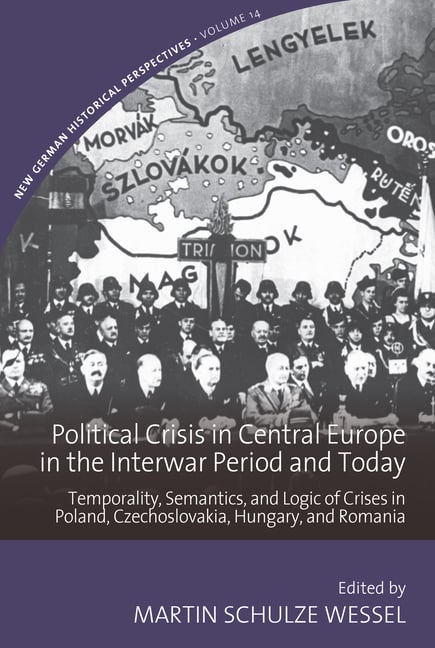
Political Crisis in Central Europe in the Interwar Period and Today: Temporality, Semantics, and Logic of Crises in Poland, Czechoslovakia, Hungary, a - Library Binding
Pay over time for orders over $35.00 with
Offers & Perks
Earn 141 points with this purchase
Added to your rewards balance after checkout.
100 points welcome bonus
Create an account and start with extra points.
Linking contemporary concerns about democratic fragility with historical analysis, this volume examines the crisis and failure of democracy in Central and Eastern Europe during the interwar period from a comparative and interdisciplinary perspective. The contributions explore political culture, constitutional traditions, religion, violence, and crisis discourse in Germany, Poland, Czechoslovakia, Hungary, Romania, and Slovakia. Rather than focusing narrowly on institutional breakdown, the authors emphasize long-term cultural legacies, narratives of crisis, and exclusionary identities that undermined democratic pluralism. Interwar Europe functioned as a laboratory of democracy whose experiences offer critical insights into the challenges facing liberal democracies today.
Martin Schulze Wessel is a German historian and professor of Eastern and Southeastern European history at Ludwig Maximilian University in Munich since 2003. His research focuses on the history of Ukraine, Russia, Poland and Eastern Europe, as well as religious history and imperial history. Since 2004, he has been Director of the Collegium Carolinum. He is a co-founder of the German-Ukrainian Historical Commission. From 2012 to 2016, he was chairman of the Association of German Historians. His most recent publication, The Overlooked Nation, is a study of the interrelated German-Ukrainian relations since the 19th century.
Contributor(s)
Free shipping on orders over $75. Standard shipping takes 3-7 business days. Eligible items may be returned within 30 days of delivery. Conditions apply.